By Thebe Mabanga
City of Johannesburg mayor Dada Morero appeared to paper over growing concerns about the city’s finances on Wednesday after National Treasury took the drastic step of withholding Johannesburg’s R3.5 billion equitable share allocation. Instead, the city announced it had secured about R5 billion in loans for water and electricity infrastructure.
Treasury is acting under Section 216 of the Constitution and Section 38 of the Municipal Finance Management Act. In total, it withheld R13.5 billion in transfers to 69 municipalities.
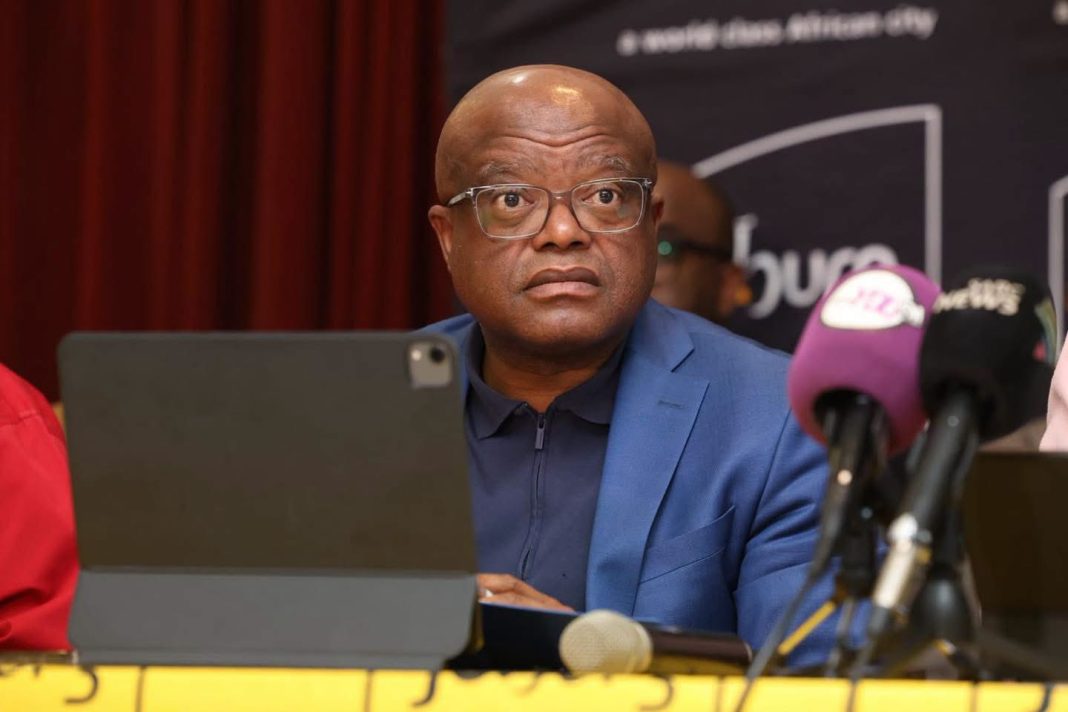
Responding to the funding freeze at a media briefing, Morero outlined measures that provided little detail on how the city’s finances would be stabilised.
Morero referred to a meeting with Treasury in May and subsequent correspondence, while overlooking the fact that the engagement failed to prevent the grant suspension.
“Our working relationship with National Treasury is yielding results,” Morero said.
“As we speak, we have received correspondence from National Treasury that confirmed that the City’s 2026/27 annual budget is funded.”
Earlier on Wednesday, however, Treasury made no such public confirmation. Instead, it said municipalities with unfunded budgets, including Johannesburg, would have to provide written undertakings that they would not table unfunded budgets in future.
Morero added: “This is comforting feedback as it confirms that our financial management is okay and has not reached a crisis state. However, more needs to be done to manage our cash flow and revenue performance.”
He did not explain how the city’s major financial challenges would be addressed. These include cash coverage of between five and 17 days, well below the recommended 30 days to three months, as well as a roughly R10 billion wage agreement with the South African Municipal Workers’ Union (SAMWU) aimed at addressing historical salary disparities, which Treasury has questioned.
Morero said Eskom and Rand Water would receive outstanding payments by mid-July, but did not disclose the amounts owed or where the funds would come from.
The main intervention highlighted by Morero was that the City had regularised R1.8 billion in unauthorised, irregular, fruitless and wasteful expenditure, with a further R6.4 billion still under consideration. The process followed investigations by the Municipal Public Accounts Committee (MPAC) across the city’s entities.
However, MPAC has itself cautioned that retrospectively regularising irregular expenditure does not address the underlying causes of poor financial management.
One positive outcome of the investigations has been the identification of major drivers of irregular expenditure, including City Power’s R2.1 billion overspending on bulk electricity purchases.
Morero also pointed to funding through Metro Trading Services for Pikitup. The funds are ring-fenced for fleet refurbishment, with an initial R30 million allocated, and cannot be used for other expenditure.
He also highlighted the need to modernise the city’s billing system but provided no further details.
Addressing what the financial challenges mean for residents, Morero said: “It means service delivery remains our priority, with funds recovered through improved collections and cost containment directed toward protecting water, electricity, waste and public safety services. It means we are protecting the free basic services on which indigent households depend, while ensuring that those who can pay do pay.”
He did not elaborate on how those objectives would be achieved.
Morero added that the city was borrowing “responsibly and strategically” to fund infrastructure renewal, including a €200 million (about R3.8 billion) multi-year facility from the German Development Bank (KfW) for City Power infrastructure, as well as about R1.75 billion for Johannesburg Water’s capital programme over the coming years.
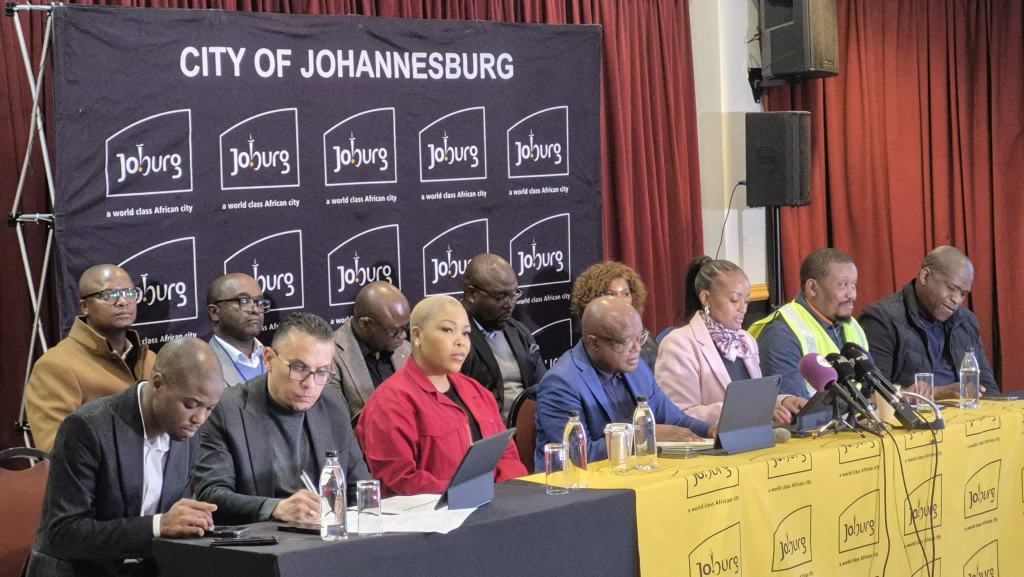
Last week, the city avoided a ratings downgrade after Moody’s maintained its positive outlook.
The loans and ratings decision also come against the backdrop of South Africa’s recent sovereign ratings improvements, which generally improve municipalities’ access to borrowing.
The Johannesburg Community Action Network (CAN) warned of a “regional financial shock” following Treasury’s decision to suspend the grants.
Treasury named the City of Johannesburg, Emfuleni, Lesedi, Sedibeng District Municipality, Merafong City and Rand West City among the Gauteng municipalities affected by the July funding freeze.
“Johannesburg is the centre of Gauteng’s economic system. When the city and surrounding municipalities are financially weakened at the same time, the pressure will move across municipal boundaries through people movements, business uncertainty, capital outflows and deteriorating service delivery,” Joburg CAN said in a statement.
The organisation warned that residents could face additional pressure on water and electricity supplies should the city fail to meet its mid-July commitments.
The network also called on the City to publish its financial turnaround plan, echoing Treasury’s requirement that affected municipalities submit credible recovery plans before the suspended grants are released.
INSIDE METROS