
By Thapelo Molefe
ANC president Cyril Ramaphosa has condemned political killings ahead of the local government elections, calling on police to investigate attacks on party members.
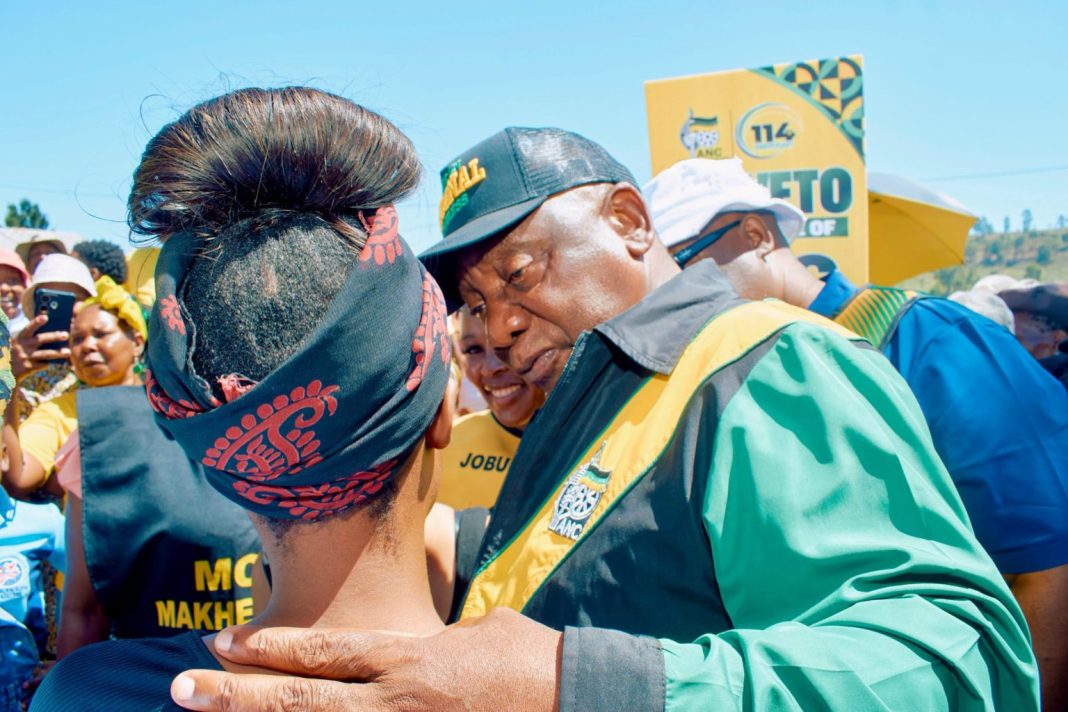
Speaking during a door-to-door campaign in Soweto’s Orlando and Diepkloof on Sunday, he warned against violence that could derail the local government elections.
Four people, including ANC Youth League members, were shot dead in Katlehong in Ekurhuleni after attending a funeral service. Earlier this month two ANC members were shot dead and three other people injured during a door-to-door election campaign in uMgababa, south of Durban.
“The killing of either people who are campaigning or even candidates is something that is completely unacceptable. We have actually said the police must turn every stone,” he said.
“We cannot accept a situation which seeks to derail our elections and our people’s path to democracy once again.”
He urged political leaders to discourage their supporters from using violence to gain political advantage.
During Sunday’s campaign, the president acknowledged that persistent service delivery failures, including water shortages and crumbling infrastructure, remained major challenges for Soweto residents.
He said the government had established a National Water Crisis Committee to help municipalities address water shortages and repair ageing infrastructure, including in Johannesburg, where the water crisis has become a growing concern.
He said Johannesburg’s ageing infrastructure had contributed to the challenges.
Asked whether the water crisis could damage the party’s electoral prospects, Ramaphosa said the government was focused on resolving the problem rather than assigning blame.
The ANC president also identified load reduction as another challenge facing Soweto residents. He said the growing number of backyard rooms and illegal electricity connections had contributed to transformer failures.
Ramaphosa raised concerns about population growth and overcrowding in Soweto, citing Orlando as an example of how increased residential density was placing pressure on existing infrastructure.
He said an area that previously accommodated about 6,800 people had grown to approximately 38,800, partly because residents had built additional rooms for relatives or to rent out.
While this created economic opportunities, he said it had also increased demand for services.
“We do need to either increase the infrastructure or de-densify,” Ramaphosa said, adding that the provincial government and metro were considering ways to address the problem.