
By Johnathan Paoli
The Electoral Commission of South Africa (IEC) has expressed confidence in the progress of Wednesday’s local government elections, saying arrangements are in place to begin counting immediately after voting stations close, despite isolated technical problems, power outages and weather-related disruptions.
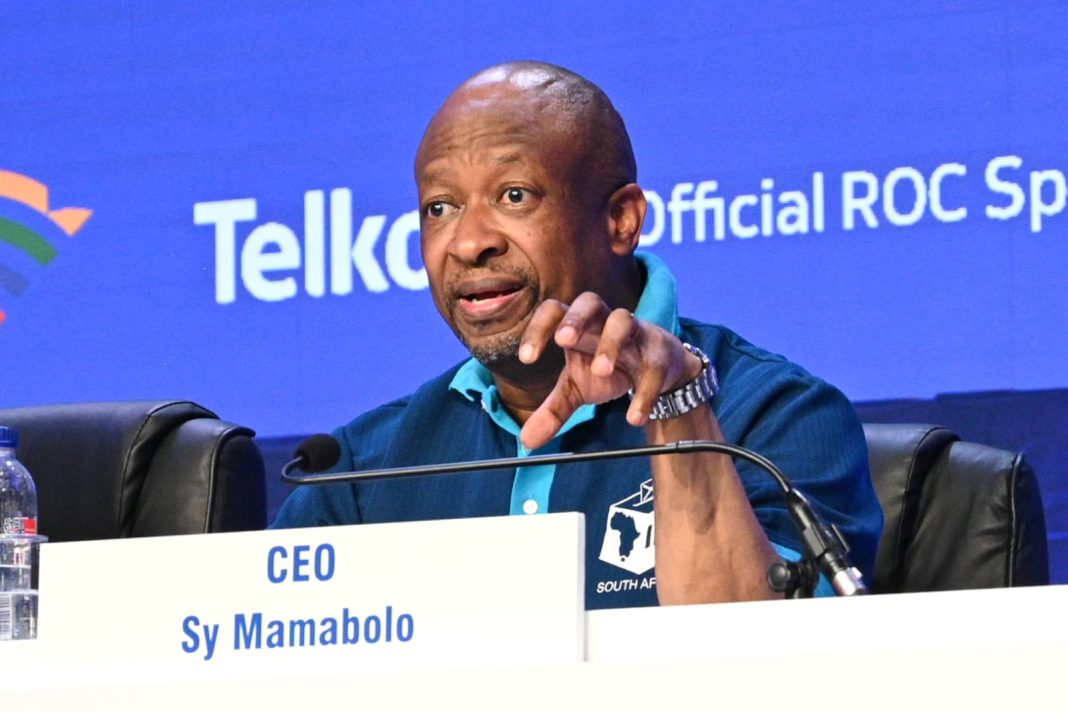
With voting scheduled to close at 9pm, IEC Chief Electoral Officer Sy Mamabolo said the Commission had prepared alternative lighting arrangements for affected voting stations to ensure the counting process could continue without unnecessary interruptions.
“Voting has progressed well across the country, notwithstanding some isolated incidents. As voting enters the evening period, adequate arrangements have been made to ensure the availability of generators and alternative lighting facilities at voting stations in areas that have experienced electricity outages,” Mamabolo said.
The update comes as millions of residents cast their ballots to determine the composition of municipal councils responsible for delivering basic services, including water, electricity, sanitation, roads and waste management.
Preliminary figures released at the briefing showed that 12 million voters had cast their ballots by 5pm.
Gauteng recorded three million voters, followed by KwaZulu-Natal with 2.5 million, the Western Cape with 1.5 million and the Eastern Cape with 1.4 million.
Limpopo recorded 1.1 million, Mpumalanga 854,901, North West 702,133, the Free State 588,237 and the Northern Cape 299,381.
The IEC also addressed reports of problems at some voting stations, including complaints from voters in Tembisa who were allegedly told that their details indicated they had already voted.
Mamabolo said some of these incidents were linked to the scanning process, where voters were scanned when joining a queue and scanned again when entering the voting station.
“What we are finding in some of those cases, such as in Tembisa, is that on the queue we have a device and people get scanned to the queue and then scanned again when they get into the voting station. If that happens, the second scan will reflect you to have voted,” he said.
He added that similar incidents had been experienced in isolated areas across the country.
The Commission also faced questions about electricity outages, particularly in North West, where a transformer had burnt down in Itsoseng in the North West.
Mamabolo said Eskom had been working to restore electricity since the previous day, while the IEC had made arrangements to ensure that alternative lighting was available where necessary.
Weather conditions had also affected some voting stations, with storms and strong winds damaging tents in parts of the country.
But Mamabolo said the affected infrastructure had been re-established and had not materially disrupted voting.
One exception was a voting station in the Eastern Cape where a bridge had been washed away, forcing IEC officials to be transported by helicopter.
Because the helicopter could only operate during daylight hours, the station was unable to continue beyond 5pm.
The IEC said the counting process would take place at individual voting stations in the presence of party agents, independent candidate agents and accredited observers.
Ballot papers will be checked for the Commission’s security stamp before being separated according to the different electoral contests, including proportional representation, ward candidates and district council PR ballots where applicable.
Results will then be reconciled against the ballot papers received, issued, unused, spoiled and counted.
Mamabolo stressed that party agents were entitled to observe the counting process, adding that any presiding officer preventing them from doing so would be acting outside the Commission’s instructions.
The Commission said the results would undergo verification and independent external auditing, with political parties, independent candidates, observers and the media able to monitor the process at results operation centres.
INSIDE METROS