By Johnathan Paoli
The Electoral Commission of South Africa (IEC) expects the collation of results from the 2026 Local Government Elections to be completed by the weekend, with more than 60% of results captured as officials continue with the verification and auditing process.
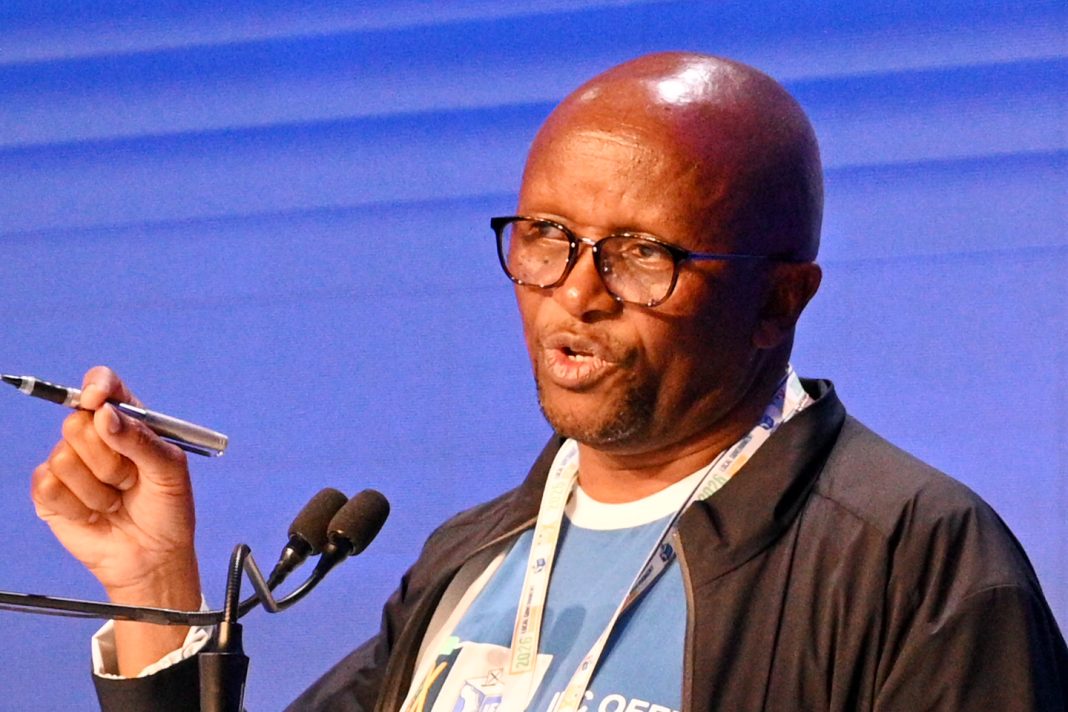
Briefing the media on Thursday evening, IEC chairperson Mosotho Moepya said that, as at 5pm, more than 60% of the 66,073 results had been captured, while 40,202 results slips had been scanned and 32,238 had undergone independent auditing.
“The Commission is pleased to report that the capturing and verification of election results are progressing steadily across the country. The Commission salutes the thousands of men and women who are pulling all the stops to ensure the finalisation of the capturing and auditing of results,” Moepya said.
The IEC said 65 of the country’s 213 municipalities had completed the capturing, scanning, auditing and exception processes, representing 31% of municipalities.
Provincially, the Northern Cape was leading the results capturing process at 87%, followed by the Western Cape at 69%, the Free State at 64% and the Eastern Cape at 60%.
Mpumalanga had captured 52% of its results, while KwaZulu-Natal stood at 37%.
Gauteng and North West were both at 35%, with Limpopo trailing at 23%.
At municipal level, the Northern Cape was also ahead, with 21 of its 26 municipalities having completed the required processes, representing 81%.
The Western Cape had completed 14 of its 25 municipalities, or 56%, while the Free State had completed seven of 19 municipalities, representing 37%.
Mpumalanga had completed five of its 17 municipalities, while the Eastern Cape had completed nine of 33.
KwaZulu-Natal had completed six of its 44 municipalities, North West two of 18 and Limpopo one of 22.
Gauteng was the only province where none of the nine tracked municipalities had completed the process at the time of the briefing.
Moepya said the commission was working to ensure that resources were allocated according to the demands of individual voting stations, with additional personnel deployed where necessary.
“We have looked, when we plan, the complexity is part of the planning process. The number of voters, another. The amount of, you know, streams, in other words. And so we get to a number of staff that would be required at that voting station. Not all voting stations have the same number of staff. We take that into account,” he said.
He added that teams could be moved from stations where work had been completed to assist those experiencing difficulties.
The IEC also defended its decision to restrict special voting to the voting station where a person was registered, following questions about people such as truck drivers and taxi operators who were unable to vote because they were away from their registered areas.
Deputy CEO Masego Sheburi said the law provided for special votes on the Monday and Tuesday preceding election day but restricted voters to their registered voting stations.
He acknowledged that the arrangements could be reconsidered through future legislative changes, including potentially allowing votes to be cast elsewhere while ensuring they were allocated to the correct voting district.
The commission also highlighted its enhanced issue tracker, which has resolved more than 1,000 cases logged since special voting began on Monday.
The platform, now incorporated into the IEC’s Virtual Results Operation Centre, allows political parties, independent candidates and electoral staff to report problems affecting the election process.
Moepya said the figures being released remained provisional until objections material to an election had been finalised.
“The Commission remains committed to finalising the results as expeditiously as possible while ensuring that all prescribed verification and quality assurance processes are rigorously followed to safeguard the accuracy, transparency, and integrity of these results,” he said.
The IEC urged political parties, independent candidates and the public to rely on officially verified results rather than partial figures circulating during the collation process.
INSIDE METROS