By Johnathan Paoli
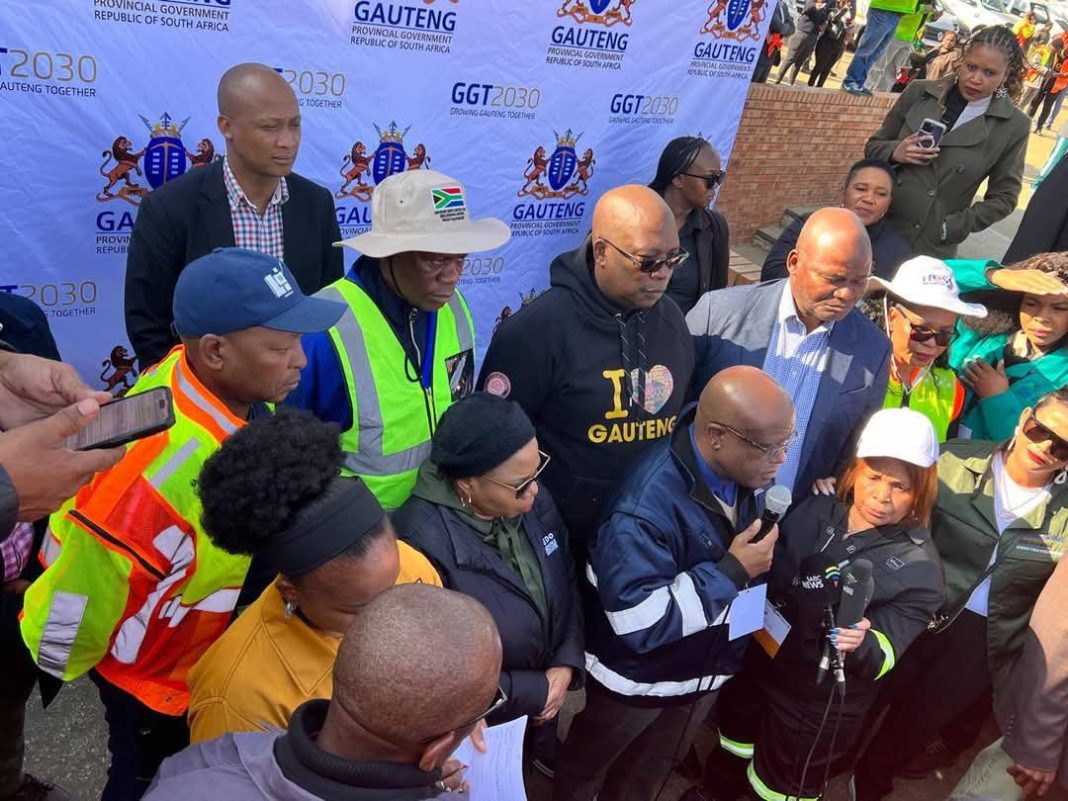
Deputy President Paul Mashatile, supported by Gauteng Premier Panyaza Lesufi, has officially launched the Clean Cities and Towns Campaign, marking a key milestone in the government’s effort to foster national unity through environmental action.
Speaking from the Walter Sisulu Square of Dedication in Kliptown, Mashatile described the campaign as more than a beautification project, but a socio-political movement to mobilise citizens behind shared national values.
“We are not cleaning for the people; we are cleaning with them. We want to live in clean cities that reflect the pride and dignity of our people,” he said.
Executive mayor Dada Morero, in his welcoming remarks, called on residents as well as South Africans in general to pledge themselves to keeping the country’s cities and towns clean.
“We are launching a programme of cleaner cities, meaning that we are calling on all South Africans to keep our cities clean. We have to continue to make that call to our people and to our communities, and eventually we will benefit from the dividends of these programmes that we are implementing,” Morero said.
The nationwide initiative aims to transform urban and peri-urban areas through coordinated clean-up operations, tree planting, and the restoration of neglected public spaces.
The launch, attended by prominent leaders including President of the South African Local Government Association (SALGA) Bheki Stofile, Members of the Executive Council (MECs), and councillors from across the Gauteng province, marked the start of what is intended to become an environmental movement.
The campaign seeks to promote sustainability, public health, and citizen responsibility.
Lesufi, standing alongside Mashatile, said it was fitting for the campaign to begin in Soweto.
“Charity begins at home. We can’t demand change in other places if our own backyards are unclean. Today, the leadership shows that we are serious,” Lesufi declared.
Lesufi emphasised the symbolism of starting the campaign in Soweto.
“It’s this kind of leadership that will assist us to resolve the challenges that we have in our province. The city has really put their best foot forward, especially in ensuring that the square where we are in is retained to its glory so that we don’t have challenges,” he said.
Both leaders stressed that the campaign is not merely about optics or public relations, but about reviving the collective ethic that defined South Africa’s liberation.
“This place, Kliptown, is where the Freedom Charter was adopted. What better place to start than here, where people first dreamed of a better, united country,” Mashatile noted.
The Clean Cities and Towns Campaign will involve organised clean-up drives, community mobilisation and municipal support to restore dignity and pride to public spaces, especially in townships and informal settlements.
Local communities are encouraged to participate directly, not as spectators but as custodians of their environment.
SALGA President Bheke Stofile highlighted the campaign’s broader economic and social implications.
“No investor will consider a community that is dirty or disorganised. Clean spaces signal safety, functionality, and pride,” he said.
He also called for a more nuanced inter-municipal competition system that recognises the disparity in resources between metros, districts and local municipalities.
“We are considering introducing incentive-based programmes tailored to each municipality’s capacity,” he said.
Stofile also pointed to systemic challenges, including the decline in municipal revenue collection, which hinders service delivery.
“Banks, insurance companies, and corporations must play a more active role in supporting municipalities. The homes they insure, and bond need functional municipalities around them,” he said.
The mayor pointed out that the long-term success of this campaign depends on behavioral change at every level of society.
City of Johannesburg officials, including MMCs Margaret Arnolds, Loyiso Masuku, Eunice Mgcina and Speaker of the Council Nobuhle Mthembu, joined the cleaning teams that moved through Kliptown, collecting waste, planting trees, and engaging with residents and traders.
The campaign follows President Cyril Ramaphosa’s recent call for urgent action on urban service delivery.
The initiative complements existing municipal programs, including the “Bomb Squad” targeting service backlogs ahead of the G20 Summit and the “Cleaner Joburg 100 Spots” drive to clear illegal dumping.
The Deputy President will continue visiting provinces as the campaign rolls out.
Lesufi confirmed that Gauteng would lead by example, with weekly clean-up operations already scheduled in Johannesburg, Ekurhuleni, and Tshwane.
He described the campaign as defining the initiative of blending civic renewal with environmental justice and reigniting the spirit of national unity from the ground up.
INSIDE METROS