By Lebone Rodah Mosima
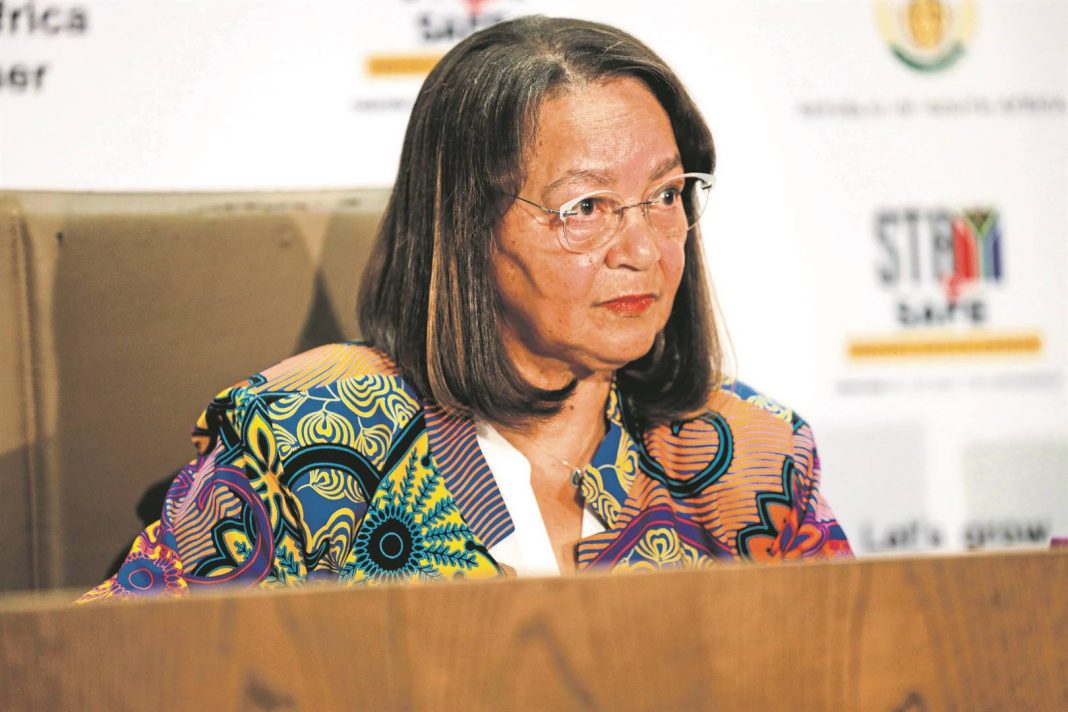
While South Africa has emerged as the strongest-performing African destination, Tourism Minister Patricia de Lille has called on the West Rand to submit projects that will form part of a pipeline to be taken to investors and financiers.
Speaking at the inaugural MORAME Regional Tourism Conference 2026 on Saturday, De Lille said the West Rand had been shaped by mining, but above ground was an extraordinary concentration of natural, cultural and historical assets.
MORAME, the regional tourism organisation whose name is derived from Mogale City, Rand West City and Merafong City, brings together the three West Rand municipalities around a shared tourism strategy.
De Lille said the region’s assets included the Cradle of Humankind, the Magaliesberg, mining heritage, landscapes, wildlife, adventure, gastronomy, culture and communities with unique stories that could not be replicated anywhere else.
“The West Rand District Municipality itself recognises the need to develop a secondary economy alongside mining and identifies tourism as one of the opportunities around which that diversification can take place,” De Lille said.
“So ‘From Extraction to Experience’ must be more than the theme of this conference. It should describe an economic transition.”
She said the question for the conference was how to convert the West Rand’s tourism assets into a functioning regional visitor economy that attracts investment, creates businesses, increases visitor expenditure and supports livelihoods.
De Lille said the Department of Tourism had recently convened the second South African Tourism Infrastructure Investment Summit, where 15 tourism infrastructure projects valued at R3.5 billion were presented to investors and financiers.
“At the summit, North West MEC for Economic Development, Conservation, Environment and Tourism, Bitsa Lenkopane submitted 11 tourism projects for the SATIS pipeline,” she said.
“These projects, valued at R1,2 billion will now go through the screening process and added to the investment booklet.”
To attract capital, she emphasised that a project requires a credible business case, feasibility work, appropriate land and operating rights, approvals, realistic revenue assumptions, infrastructure planning and a clear allocation of risk.
She added that the same discipline should be applied to the investment pipeline that emerges from the conference.
“One of the most important requirements, is to stop thinking about tourism as a collection of isolated attractions,” she said.
“A visitor does not experience municipal boundaries. They experience a destination.”
She said the Cradle of Humankind, Magaliesberg, mining heritage, adventure activities, cultural experiences, restaurants, accommodation, wildlife and the connectivity provided by Lanseria Airport should therefore not be treated as separate propositions competing for attention.
She added that they could form part of one coherent visitor proposition.
“Indeed, the West Rand’s own spatial planning has previously proposed building its tourism economy around a wider Cradle–Hartbeespoort–Magaliesberg–Pilanesberg tourism complex, recognising that visitors move according to experiences rather than administrative borders,” she said.
“That is the scale at which destination planning must increasingly take place.”
She said the Cradle of Humankind could be the anchor, but the objective should be to use that global attraction to distribute visitors and expenditure across a much broader regional economy.
“That is why MORAME, municipalities, the Gauteng Tourism Authority and the private sector need to develop a shared destination identity and a coordinated approach to marketing,” she said.
She noted that the economic objective of destination marketing was not simply greater visibility. It was conversion: more visitors, longer stays, greater expenditure and a wider geographic distribution of that expenditure.
In 2025, she said, domestic overnight trips reached 44.7 million, with expenditure of R111.6 billion, while South Africa welcomed a record 10.5 million international arrivals, with expenditure of R102.2 billion.
She added that between January and August this year, international arrivals reached more than 7.5 million, an increase of 11.7% compared with the same period last year.
De Lille also said Stats SA had recently announced that South Africa welcomed more than 1 million international tourists in August.
According to UN Tourism data, she said, South Africa had emerged as the strongest-performing African destination in the first half of 2026.
“Now, this growth is not by accident, it is by design through the cabinet-approved Tourism Growth Partnership Plan, which government and the private sector have agreed to, with 5 priorities,” she said.
She said these were ease of access, coordinated destination marketing, safety and security, tourism product development and job creation.
However, she said tourism growth would mean very little if ownership and the economic benefits of the tourism economy remained concentrated.
“The communities of the West Rand cannot simply provide the cultural backdrop against which tourism takes place,” she said.
“They must participate in the economics of tourism.”
She said this meant employment, but added that participation must extend beyond employment to enterprise, procurement and ownership.
She added that if a new resort was developed, the question should be asked: who supplies its food?
“Who provides transport? Who maintains the property? Who produces its furniture? Who supplies entertainment? Which local guides, restaurants, artists and tourism businesses become part of the visitor experience?” she asked.
“And importantly, how do young people, women, township and rural enterprises gain access to those opportunities?”
She said the objective should be to create tourism value chains in which visitor expenditure circulates through the local economy rather than leaving the region immediately after the transaction.
She said she had recently returned from Geneva, where she served as co-chair of the inaugural Beyond Tourism Day at the World Economic Forum. She said she travelled more than 12,000 kilometres to make an argument that she had consistently made at home: “Tourism policy is economic policy.”
“The World Bank has identified tourism among sectors with significant potential to generate local employment at scale, while globally approximately one in every ten jobs is connected to tourism,” she said.
“This global recognition of tourism’s economic power must be central to how MORAME achieves its vision 2030.”
From extraction to experience, she called on the region to develop a plan, assign responsibility, mobilise investment and implement it.
She added that tourism policy was economic policy, and the West Rand had an opportunity to demonstrate what that meant at a regional level.
INSIDE METROS