By Johnathan Paoli
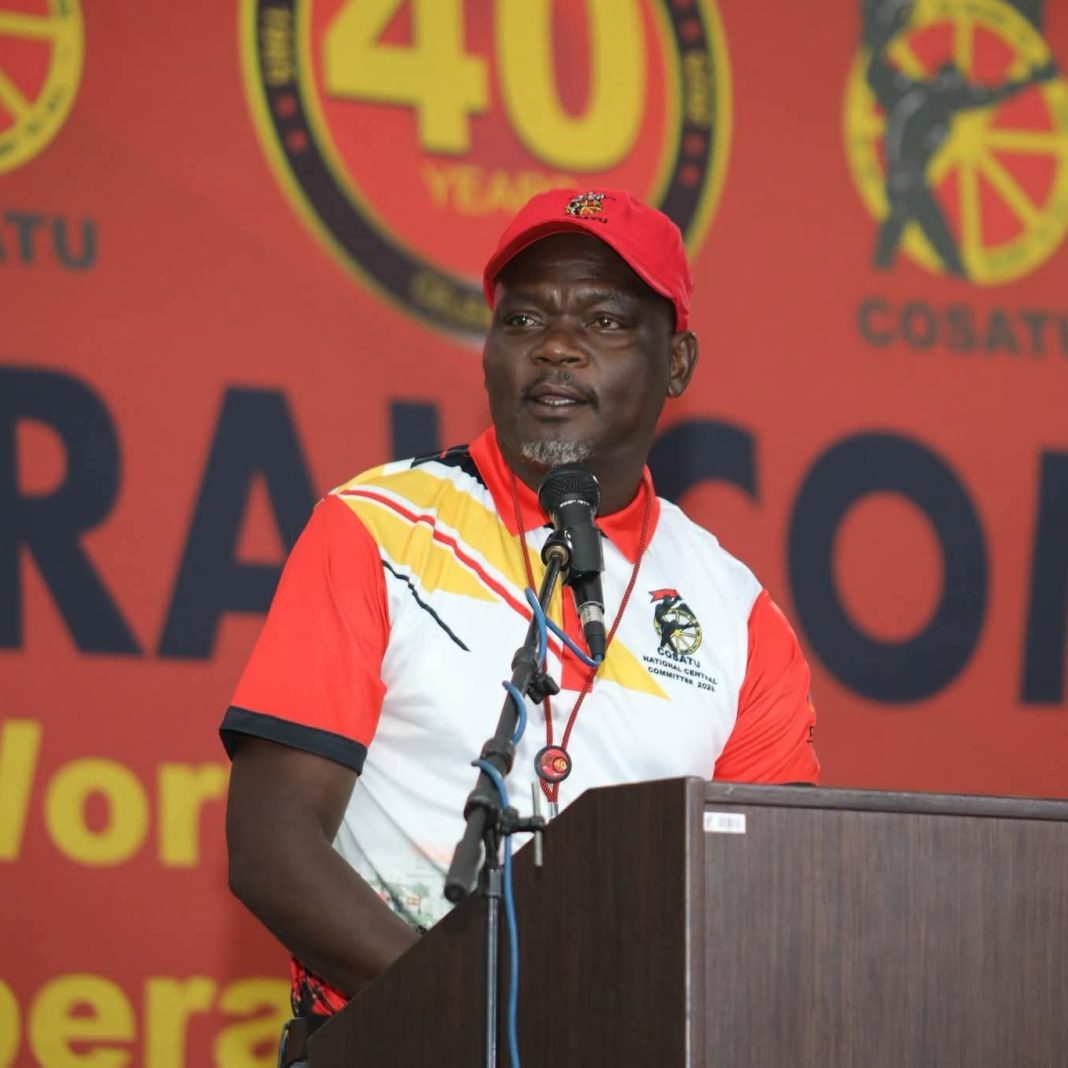
Newly elected Cosatu president Mike Shingange has called for unity within the labour federation and the broader tripartite alliance, urging workers to support both the ANC and the South African Communist Party (SACP) in the November 4 local government elections.
Closing Cosatu’s 15th National Congress at Emperors Palace in Ekurhuleni on Wednesday, Shingange said the federation could not afford further divisions after internal conflict threatened to derail its long-delayed congress.
“When Cosatu is divided, it cannot provide leadership to workers and society. When workers are divided, they cannot emerge victorious in our struggles,” he said.
His remarks underscored the challenge facing the new leadership: maintaining unity within the ANC-SACP-Cosatu alliance while pushing for a more assertive working-class agenda amid disagreements over economic policy and the direction of the Government of National Unity (GNU).
Shingange said the congress had taken place at a critical moment for the federation, which had struggled to agree on proceeding with the gathering just a month earlier.
“We were at each other’s throats. Many were writing our very obituary. Today, as we conclude this successful 15th National Congress, we can reflect with pride that when the very future of the federation was at stake, we acted in defence of its unity, its history, its future, its members and workers across our land,” he said.
He said unity was essential to defending collective bargaining, confronting job losses and campaigning for a living wage, decent work and a state that prioritised working-class interests.
The congress declaration reinforced this position while setting out a left-wing political and economic programme.
It described the ANC’s 40.18% share of the vote in the 2024 national election, which cost it its parliamentary majority for the first time, as a strategic setback for the revolutionary alliance.
The declaration also criticised the GNU, arguing that the inclusion of right-wing parties had put pressure on the alliance and threatened workers’ gains.
Despite these tensions, Cosatu committed itself to continued support for both alliance partners in the upcoming elections.
“Congress resolved on a socialist axis and working-class electoral strategy, by taking a principled position for continued support of the alliance as a strategic centre, and to keep the unity of workers by supporting the ANC and the SACP at the upcoming 2026 local government elections,” the declaration stated.
The resolution comes as the SACP prepares to contest the elections independently, raising questions about how the alliance partners will coordinate their campaigns while competing for votes.
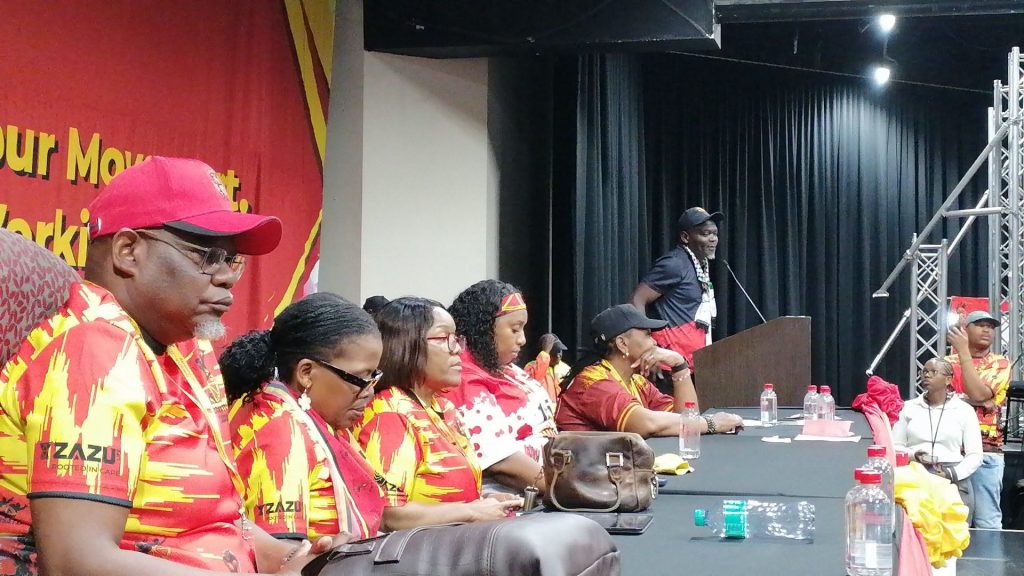
PHOTO: X/Cosatu
Shingange urged Cosatu members to mobilise workers and communities at workplaces, homes, shops, taxi ranks and bus stations to encourage voter participation.
“Our mandate is clear. We must give our full support to our beloved alliance partners, the African National Congress and the South African Communist Party, over the remaining two and a half weeks to ensure the alliance decisively wins these elections and is able to form progressive governments across our municipalities that will be biased towards the working class,” he said.
He maintained that the alliance remained a vehicle for defending workers’ rights and advancing their interests despite its internal contradictions.
However, the declaration signalled that Cosatu’s support would not amount to an unconditional endorsement of its political partners’ policies.
It called for the reconfiguration of the alliance to advance working-class interests, including the establishment of an Alliance Political Council, an Alliance Summit and an alliance-led Congress of the Left.
It also rejected austerity, privatisation and outsourcing, calling instead for industrialisation, greater public investment and measures to reduce unemployment and inequality.
The congress resolved to develop a joint socialist programme and strengthen a Left Popular Front as part of a longer-term effort to build a socialist movement of workers and the poor.
“We dare not abandon the contestation of the political landscape to big business or their political formations. We dare not hand over the state, one of the most important tools to drive the empowerment and the emancipation of the working class, to our class enemies,” Shingange said.
He called for an urgent Alliance Political Council and summit to establish a path towards renewal.
But the ideological differences within the federation could complicate the new leadership’s efforts to maintain unity, particularly following the election of former president Zingiswa Losi as general secretary.
Losi secured 996 votes against outgoing general secretary Solly Phetoe’s 809, while Shingange defeated South African Democratic Teachers Union deputy president Mabutho Cele by 978 votes to 836 in the presidential race.
Political and governance analyst Sandile Swana told Inside Metros that Shingange’s victory followed efforts to prevent him from becoming president, suggesting that he would take office amid significant opposition within the federation.
“The bitter struggle is the eventual victory of Mike Shingange, because we must admit that there were efforts to prevent him from ascending to office. So clearly he comes into office with powerful enemies and opponents,” Swana said.
He said the leadership change reflected a longstanding ideological contest within the ANC and the broader alliance over South Africa’s economic direction.
According to Swana, the ANC’s shift towards neoliberal economic policies had deepened tensions with left-leaning members of the alliance, who favour a stronger socialist programme, industrialisation and an end to austerity.
He questioned whether organised labour had sufficient influence over government policy, citing Operation Vulindlela as an example of economic reform in which, in his assessment, big business had gained prominence while Cosatu and trade unions were sidelined.
Swana said Shingange was likely to push for full employment, accelerated industrialisation and an end to austerity and privatisation, potentially intensifying tensions with those in Cosatu who favour closer alignment with the ANC’s economic approach.
He argued that Losi’s move from president to general secretary could sharpen the contest, given the president’s prominence as the federation’s public voice in recent years.
“Although previously it used to be the secretary-general of Cosatu, Zingiswa Losi, with her backers in the ANC and elsewhere, managed to shift that trend to make sure that the most prominent voice in Cosatu is actually the president. So Shingange is in that position now,” Swana said.
“Losi is in the secretary-general’s position. And that is going to create tension inside Cosatu between the neoliberal, pro-ANC neoliberals and the pro-left members led by Shingange,” he added.
Swana warned that the tensions could threaten the leadership’s stability over the next three years, although it remains to be seen whether the ideological differences will develop into an organisational crisis.
For now, Shingange has made unity the defining message of his presidency, while the congress declaration commits Cosatu to challenging economic policies it considers detrimental to workers.
The central test will be whether the federation can mobilise support for both the ANC and the SACP in November while pressing its political partners to adopt a more explicitly working-class economic programme.
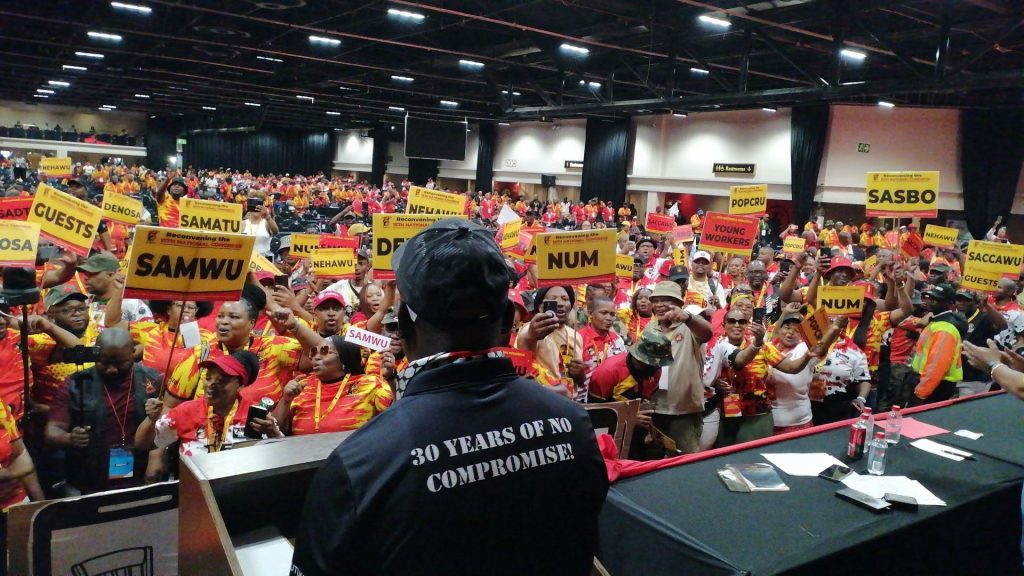
INSIDE METROS