By Charmaine Ndlela
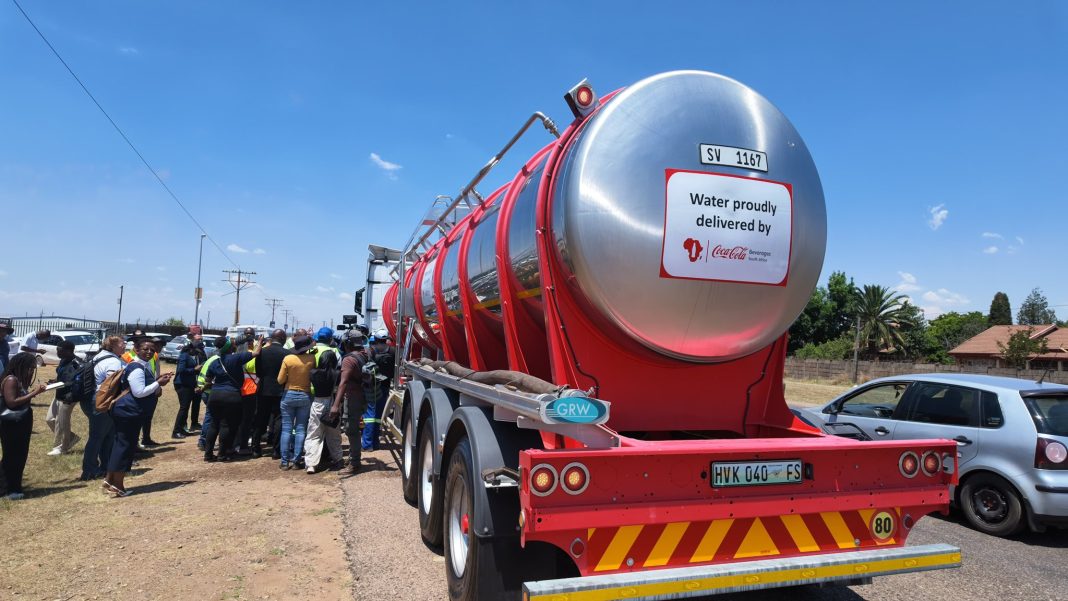
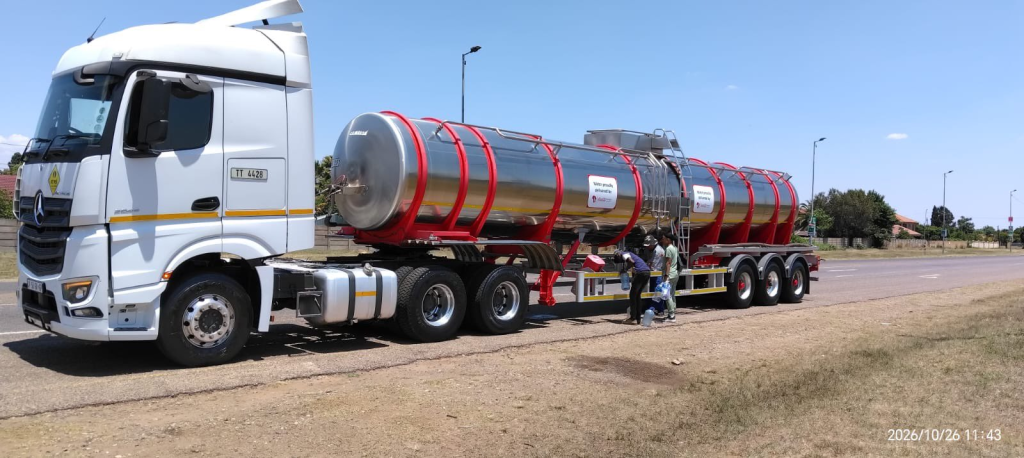
The City of Tshwane has received a 36,000 litre water tanker that’s been donated by Coca Cola to assist with the delivery of water to residents in Bronkhorstspruit and surrounding areas to restore water supply through the Bronkhorstspruit Water Treatment Plant.
The truck will be stationed at the Bronkhorstspruit Hospital, Cultura High School and Riamar Park Shopping Complex.
Tshwane mayor Nasiphi Moya welcomed the private sector’s support, saying the City and Rand Water were working to restore the plant’s operations while providing temporary water supplies to affected communities.
The tanker will be stationed at Bronkhorstspruit Hospital, Cultura High School and Riamar Park Shopping Complex to assist residents while the municipality continues supplying water through tankers, JoJo tanks and boreholes.
“Our ultimate goal is to ensure that the plant becomes operational and that residents receive water through their municipal taps,” Moya said.
The donation comes as the municipality faces scrutiny over its handling of the water crisis, including shortcomings in meeting commitments made to the Department of Water and Sanitation (DWS) to rehabilitate the treatment plant.
In a media statement, Moya acknowledged responsibility on behalf of the city for the failures, including an interruption in chlorine supplies that contributed to the crisis. However, she rejected suggestions that the longstanding problems at the plant had been ignored or that no meaningful interventions had been undertaken.
Moya said the Bronkhorstspruit Water Treatment Works had experienced years of infrastructure deterioration, inadequate maintenance and underinvestment, leading to recurring equipment failures, declining raw-water quality and reduced production capacity.
The extent of the challenges was reflected in the DWS’s 2023 Blue Drop Report, which gave the Bronkhorstspruit Town Water Treatment Works a score of 42.3%, down from 96.8% in 2014.
According to Moya, these findings showed that the plant’s operational challenges predated the current administration, which took office in October 2024.
She also pointed to pollution from upstream sources, including water infrastructure and activities outside the city’s municipal boundaries, saying rehabilitation would need to be accompanied by interventions to improve the quality of raw water entering the plant.
Moya said the city had identified the treatment works as a priority through its Service Delivery War Room, where the Water and Sanitation Business Unit regularly reported on production constraints, equipment failures, maintenance requirements and rehabilitation progress.
In February 2026, the plant was included in the city’s Water Stabilisation Plan. At the time, it was producing approximately 28 megalitres a day against its design capacity of 54 megalitres.
The plan included measures to restore pumping capacity through the procurement of additional raw-water pumps and the commissioning of high-lift pumping equipment, supported by a budget allocation of R7.7 million.
Moya said she had also addressed the plant’s challenges publicly on March 31 during the launch of the Water Stabilisation Plan, identifying the need to restore pumping capacity, replace filters and implement a structured recovery programme in coordination with the DWS.
The city’s capital allocations for the plant’s rehabilitation increased from approximately R6 million in the 2024/25 financial year to R20.8 million in 2025/26 and R57 million in the current financial year.
A further R30 million is planned for 2027/28 under the Medium-Term Revenue and Expenditure Framework.
Moya said these allocations demonstrated that the plant’s problems had been recognised and that interventions were under way before the latest crisis.
Despite the planned investments, Moya acknowledged that the city had fallen short in implementing some of its commitments to the DWS.
She said the rehabilitation programme was designed as a longer-term intervention requiring substantial investment and phased implementation, given the extent of the plant’s deterioration over several years.
The mayor said restoring the treatment works could not realistically be achieved within a few weeks or months and would require both immediate operational interventions and longer-term infrastructure improvements.
Moya said the challenges required coordinated interventions across municipal boundaries to ensure that improvements at the treatment works could be sustained.
She added that the city expected the Rand Water programme to deliver measurable improvements within the coming weeks, with progress being monitored to ensure that the necessary work was completed.
The municipality would continue working with Rand Water, the DWS and other authorities to maintain safe alternative water supplies and ensure the plant met the required water-quality standards before normal supply was restored.
Moya said she had commissioned an independent external investigation into the Bronkhorstspruit water crisis to establish why previous interventions had fallen short and how the failures contributing to the situation had occurred.
The investigation follows the interruption of chlorine supplies, which the mayor described as a serious and unacceptable failure of operational controls.
She said that the preliminary investigation has already resulted in the suspension of the plant manager pending further investigation.
INSIDE METROS