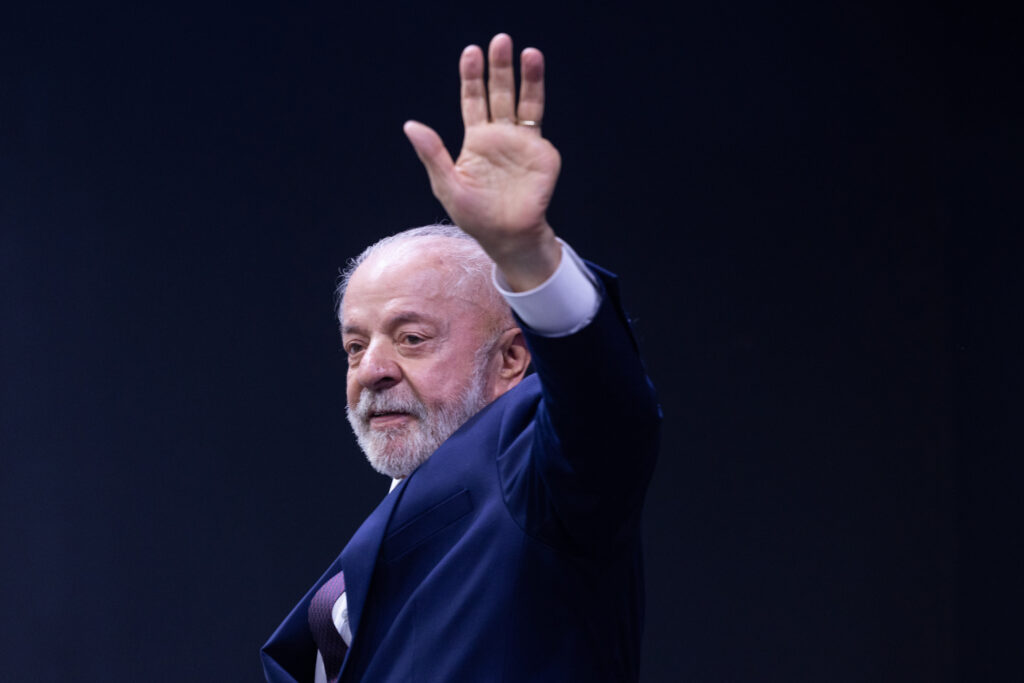
President Luiz Inácio Lula da Silva’s plan to curb public spending passed through Brazil’s Congress just hours after the real weakened past the closely watched 6-per-dollar level, already a sign that investors doubt the measures can stabilise the country’s finances.
Lower house deputies backed the text by 353-128 votes late on Monday and rejected six amendments that could change the legislation. The Senate approved the package last week after rejecting three proposed changes that would have significantly reduced its fiscal impact.
The proposal, which is expected to generate 50 billion reais to 60 billion reais ($10 billion) in savings in 2027, is Lula’s biggest effort since his reelection to show he can gradually improve the budget outlook without cutting social programs.
The measures have done little to calm markets, but Lula has pushed back against criticism from investors in Sao Paulo. On Saturday, he dismissed them as a “bunch of yuppies” and, in a sign of how little urgency he feels to appease them, has yet to name who will fill the high-profile finance minister post in his next administration.
“The market lacks confidence around Lula’s policy,” said Erwin He, a strategist at Standard Chartered Bank in New York. Investors “would like to see spending cuts or deeper structural reforms that would control the growth in mandatory spending.”
The plan instead tightens existing fiscal rules by capping inflation-adjusted spending growth at 2%, down from 2.5%, when budget targets are at risk. It also gives the government more room to freeze expenditures and reduce a range of tax benefits, including exemptions, subsidies and credits.
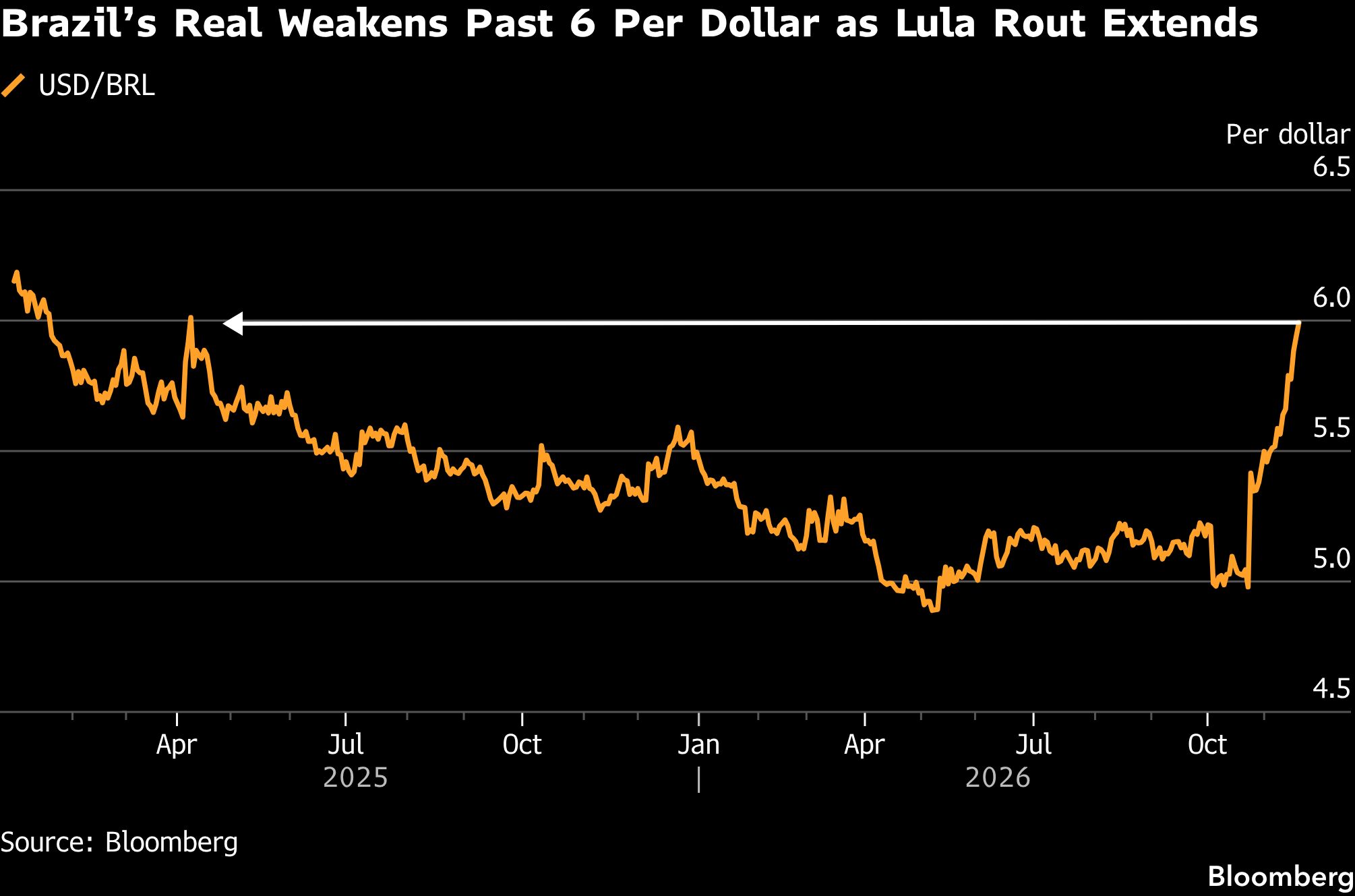
The vote came as Brazilian assets remained under pressure following Lula’s surprise reelection in late October. The real has tumbled about 16% since then, the worst performer among 31 major currencies tracked by Bloomberg, amid questions about the government’s commitment to rein in public debt and inflation. It fell as much as 1.1% Monday and briefly weakened past 6 per dollar for the first time since April 2025.
A slowing Brazilian economy is adding to the challenge. The Finance Ministry on Monday cut its growth forecasts to less than 2% for both this year and next. Yet even as activity weakens, interest rates are unlikely to fall as much as previously expected. Economists surveyed by the central bank now see the benchmark Selic rate at 13% by the end of 2027, more than 1 percentage point above their forecast before Lula’s reelection. The Selic currently stands at 13.75%.
Restrictive monetary policy is raising borrowing costs for companies and squeezing household incomes, adding to the pressure on Lula as he tries to reassure markets without retreating from campaign promises to protect social programs and public investment.
His government is aiming for a primary budget surplus, which excludes interest payments, of 0.5% of gross domestic product in 2027 and has pledged to gradually improve the result over the rest of his four-year term.
Investors have pushed for a more ambitious adjustment. Brazil’s nominal budget deficit remains above 9% of GDP and public debt has climbed past 80% of GDP, adding to pressure on interest rates and limiting the central bank’s ability to ease monetary policy.
Even the government’s own forecasts reflect growing concern. The Finance Ministry said Monday that market expectations for Brazil’s primary result deteriorated slightly in November and more sharply over the medium term, reversing some of the improvement seen after the first round of the presidential election.
The fiscal package was already diluted during its passage through the Senate. The government agreed with opposition lawmakers to increase transfers to states to compensate them for tax exemptions, reducing projected savings by about 1 billion reais next year.
The measures have generated resistance within Lula’s own Workers’ Party, where some lawmakers have argued that public investment should be shielded from fiscal restrictions and that more of the adjustment should come from higher taxes on dividends and large fortunes.
Planning Minister Bruno Moretti has spent days defending the package, arguing that restoring fiscal room is necessary for Lula to finance his priorities.
Lula on Saturday pushed back against criticism of Moretti from his left-wing allies and reaffirmed his commitment to fiscal discipline while drawing a line around spending aimed at poorer Brazilians.
“There is no scenario in which I will take a single cent from the poor to balance the budget. We have many other things we can do,” Lula said during a livestream.
“And that doesn’t mean I don’t want a sound budget or that I don’t want to pursue a serious fiscal policy.”
BLOOMBERG