By Rosina Shiko
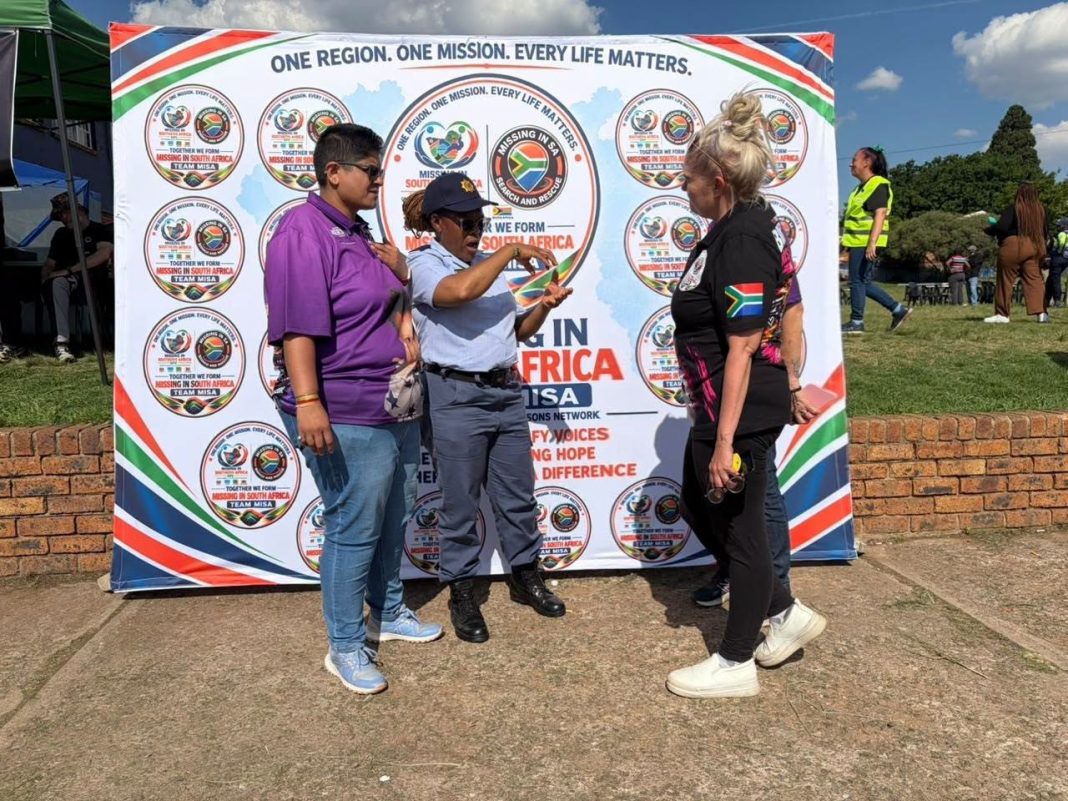
Missing in Southern Africa (MISA) NPC has called on families, communities, law enforcement agencies and other sectors of society to act swiftly in reporting abuse and missing persons, warning that delays and silence could cost lives.
The organisation launched a nationwide call to action in Johannesburg on Wednesday, as South Africa marked the start of the 16 Days of Activism for No Violence Against Women and Children, which runs until December 10.
MISA said the campaign should go beyond awareness messages and ribbons, calling for greater accountability, support for survivors and a collective effort to prevent violence against women and children.
“Behind every missing person is a family living with uncertainty, fear and unanswered questions,” the organisation said.
The call comes days after the South African Police Service (SAPS) released its latest quarterly crime statistics, which showed the scale of violence against women and children.
Between July and September 2026, SAPS recorded 9,908 rapes. Of the victims whose age and sex could be confirmed, 5,116 were women and 4,362 were children.
During the same period, 581 women and 149 children were murdered.
MISA said the figures represented families and communities affected by violence, abuse and disappearances, rather than merely crime statistics.
Speaking to Inside Metros, Michael van Niekerk, founder of Keep The Energy and a gender-based violence (GBV) activist, said South Africa was failing to adequately prevent violence.
“We are failing by not having enough prevention within society,” van Niekerk said.
He argued that greater police visibility in communities affected by crime could help deter perpetrators.
“I think many of these cases would be prevented if there were more police presence in the affected areas. I think a higher police presence would mean the perpetrators would not be as blatant to commit these crimes.”
Van Niekerk said the government’s response often focused on dealing with crimes after they had occurred rather than preventing them.
On the high incidence of rape in residential settings, he said the country needed a fundamental shift in attitudes towards women and children.
“I think that in South Africa many men see women and children as secondary to them, or as possessions. And I think that leads to many of these domestic violence cases,” he said.
“There has to be education that men and women and children are all equal human beings. There should not be a hierarchy or a power struggle.”
He said survivors had told him that violence often escalated when they challenged their abusers, spoke back or were perceived to have stepped out of line.
MISA also cautioned against the misconception that families must wait 24 hours before reporting someone missing.
The organisation said there was no such waiting period and urged families to report disappearances immediately when circumstances raised genuine concern.
“If someone disappears under circumstances that cause genuine concern, the matter should be reported immediately to the nearest police station,” MISA said.
“The first hours are critical. Prompt reporting can assist investigations and help preserve important information and potential evidence.”
Van Niekerk said the misconception persisted partly because it had previously been standard practice and was reinforced through television programmes and movies.
He urged families reporting missing persons to provide police with as much information as possible, including recent photographs, descriptions of clothing, the person’s last known whereabouts and details of people they may have been with.
“If you get more information, these cases can be solved and people can be found a lot faster,” he said.
MISA called on members of the public to report abuse, share verified missing-person information responsibly and support affected families and survivors.
“We cannot continue to look away, remain silent or wait until another life is lost before taking action,” the organisation said.
Van Niekerk said people often remained silent because they believed violence and abuse were not their concern unless they directly affected them.
He said others were reluctant to speak out when the alleged perpetrators were people they knew or respected, particularly in workplaces and churches.
However, he argued that individuals could demand accountability without resorting to hostility, by raising concerns respectfully and presenting facts.
MISA said protecting women and children required more than annual awareness campaigns, calling for sustained action, accountability, compassion and a willingness to speak out.
The organisation also urged families and communities not to dismiss warning signs of abuse, including threats, controlling behaviour, exploitation and unexplained injuries.
It said sudden changes in behaviour, such as a child becoming withdrawn or a woman withdrawing from church, work or family gatherings, should also raise concern.
Looking ahead, van Niekerk said strengthening prevention measures in schools would be one practical intervention that could help save lives.
“I think one practical change would be a change with the school frameworks and the teaching there,” he said.
He said South Africa already had legislative frameworks, including the South African Schools Act, the Domestic Violence Act and the Sexual Offences Act, but implementation remained inadequate.
He argued that interventions were too often focused on responding to the consequences of violence rather than preventing it.
Van Niekerk pointed to a nationwide school programme that trained teachers on reporting systems and gender-based violence, saying it had contributed to a reduction in GBV, particularly among young people.
“Our message is simple: Every life matters. Every missing person matters. Every survivor matters.”
INSIDE METROS