By Charmaine Ndlela
The Auditor-General of South Africa (AGSA) has warned Gauteng municipalities not to allow the upcoming local government elections to derail financial accountability, saying audit action plans, financial recovery plans and consequence management must continue despite changes in political leadership.
AGSA Gauteng business unit leader Fhumulani Rabonda said the province could not afford to see progress in municipal financial management disappear when new councils take office.
“The progress made during the current administration, even where it has been modest or uneven, must not be allowed to reset after the election,” Rabonda said.
“Local government cannot operate on five-year cycles of starting again. Communities do not experience service delivery in electoral cycles. They experience service delivery in real time.”
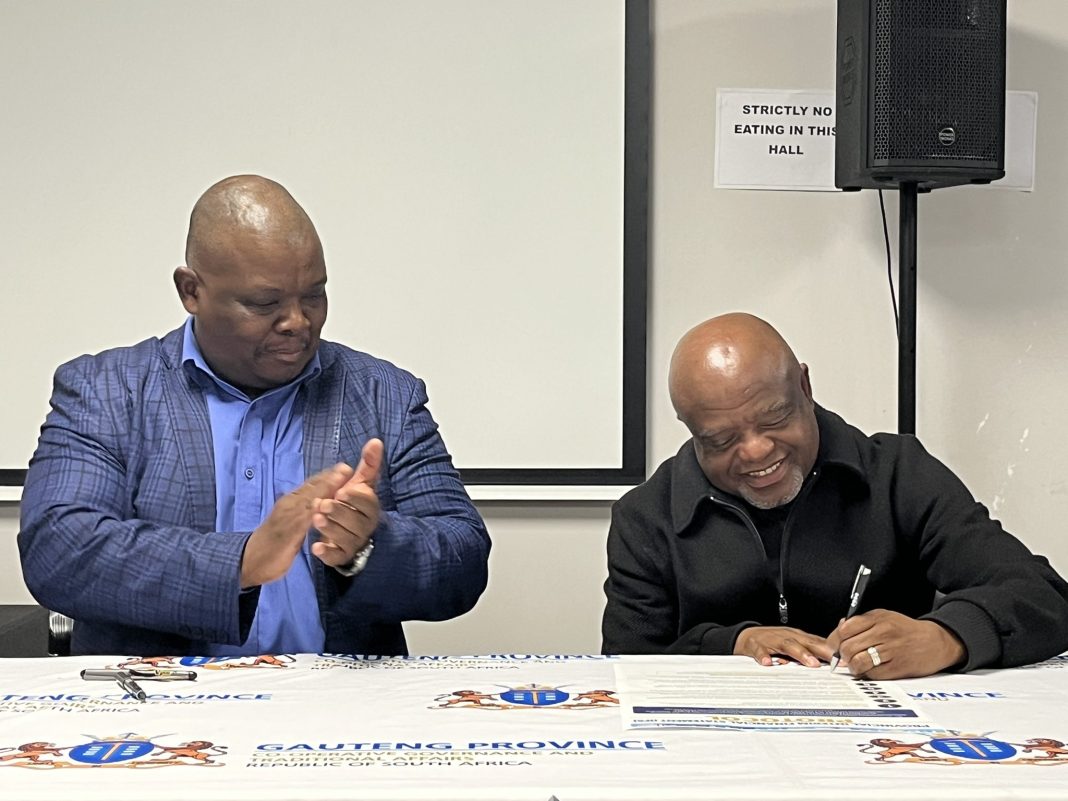
Rabonda was speaking at the Gauteng Municipal Financial Accountability and Audit Readiness Pledge Signing Ceremony at the Brixton Multi-Purpose Centre in Johannesburg on Tuesday, where Gauteng Co-operative Governance and Traditional Affairs (CoGTA), Gauteng Provincial Treasury, municipalities and AGSA launched the Provincial Interim Financial Statement Protocol.
The protocol is aimed at changing how municipalities prepare for audits by ensuring financial problems are identified and addressed throughout the year rather than only when annual audits are conducted.
Under the new approach, municipalities will be required to prepare interim financial statements, giving officials and political leadership an earlier picture of their financial position and allowing them to identify problems before they become serious audit findings.
The protocol also establishes a coordinated system between CoGTA, Gauteng Provincial Treasury, municipalities and AGSA, with each institution assigned responsibilities for monitoring, sharing information and addressing unresolved financial matters.
Municipalities will be expected to maintain reliable supporting records, conduct regular reconciliations, strengthen internal controls and address recurring audit findings.
The process will include assessing municipalities’ readiness to produce interim financial statements, setting timelines for the interim audit process, submitting financial statements and supporting documents, and monitoring the implementation of corrective action plans.
CoGTA will work with Gauteng Provincial Treasury, municipalities, AGSA, the South African Local Government Association (SALGA) and other stakeholders to monitor implementation.
Rabonda said AGSA supported the introduction of interim financial statements because many problems identified during annual audits originated months before the end of the financial year.
He said municipalities needed stronger preventative controls and systems that could identify risks early and allow officials to correct them before they became major audit problems.
“Prevention is always more effective, less costly and more sustainable than correction,” Rabonda said.
Interim financial statements would give municipal management and governance structures an opportunity to assess the quality of their financial information, identify weaknesses in controls and correct errors before they became significant audit issues.
Rabonda warned, however, that the statements should not become another compliance requirement.
“Interim financial statements should not be regarded as a compliance exercise or an event-based activity,” he said.
He said they should form part of a broader system of in-year financial management supported by regular reconciliations, quality reviews, monitoring and timely corrective action.
Rabonda said the protocol was being introduced at a critical time as local government heads towards an election period while municipalities are also dealing with the audit cycle.
Changes in councils, political leadership and oversight structures, he said, could not be allowed to interrupt accountability processes.
“Audit action plans, financial recovery plans, infrastructure commitments, material irregularity responses and consequence management processes must retain momentum,” he said.
He called on provincial leadership, particularly CoGTA, to work closely with municipal leadership to ensure stability during the transition.
“If we do this well, the election will not become a reset. It will become a renewal point,” Rabonda said.
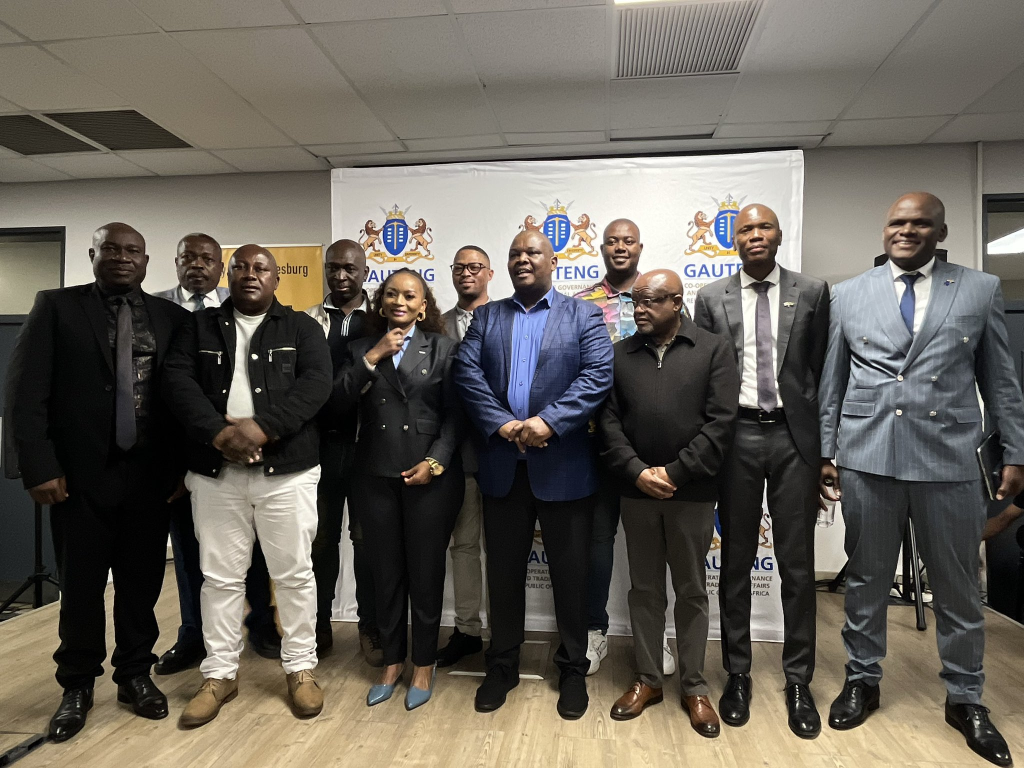
Gauteng MEC for Co-operative Governance and Traditional Affairs (Cogta) Jacob Mamabolo said the initiative was about more than improving audit outcomes.
“This protocol is not just about achieving clean audits. It is critical to building the sustainability, credibility and integrity of our institutions,” Mamabolo said.
“This engagement is not just a technical exercise, we are seeking to rebuild trust with the people.”
Mamabolo said Gauteng’s position as the country’s economic hub placed a significant responsibility on municipalities to ensure public finances were managed with integrity.
He said Gauteng contributes between 33% and 34% to the country’s gross domestic product, making the province a major driver of economic activity.
“This province has an extraordinary responsibility to make sure that we work even harder to build institutions that are credible, that have integrity, that enhances confidence,” he said.
Mamabolo said the protocol was intended to strengthen institutions and ensure residents had confidence that public money was being managed responsibly.
“What we are doing here today is actually putting just one brick to build an economy, to build a country, to build our institutions, to make sure that we can continue to grow the economy of this province so that it can be a place of prosperity for the people,” he said.
Johannesburg Mayor Dada Morero used the gathering to acknowledge that the city had not always lived up to its commitments on financial accountability.
Morero said Johannesburg had adopted its Growth and Development Strategy more than a decade ago, setting out a long-term vision for a resilient, liveable and inclusive city built on good governance.
However, he questioned whether the city had consistently honoured its commitment to maintaining reliable financial records.
“More than 10 years later, have we kept that promise? That promise to ensure reliable financial records? Truthful answer is not always and not consistently,” Morero said.
He said the city could not address its financial and governance weaknesses unless it was prepared to acknowledge them publicly.
“Accountability begins with honesty. And we cannot fix what we refuse to name,” he said.
Morero said Johannesburg, like other municipalities in Gauteng, had experienced years in which its audit outcomes did not meet the standard expected by the city.
He said accountability was not simply about producing clean financial statements, but also about what happened when public money was misused.
The city’s disciplinary board, he said, had investigated cases involving irregular, fruitless and wasteful expenditure, with some matters resulting in disciplinary action, referrals to law enforcement and amounts identified for recovery.
“We do not celebrate these numbers. Every case represents a failure, but we will not hide those failures either,” Morero said.
“Where officials or anyone acting on behalf of the city misuses public funds, they have to be held accountable regardless of their rank or status.”
Morero said every rand spent by municipalities ultimately belonged to residents.
“The residents’ money is not ours. Every rand the municipality spends belongs to our residents,” he said.
He pointed to pensioners paying rates and taxes and small businesses paying for municipal services, saying residents ultimately paid the price when public money was lost through poor records, irregular expenditure or late reporting.
“A pothole left open, a street light left dark, or services left undelivered,” he said.
Morero also warned that the signing of the protocol could not become a symbolic exercise.
“A signature costs nothing. What will matter is what we do tomorrow and every waking day after that,” he said.
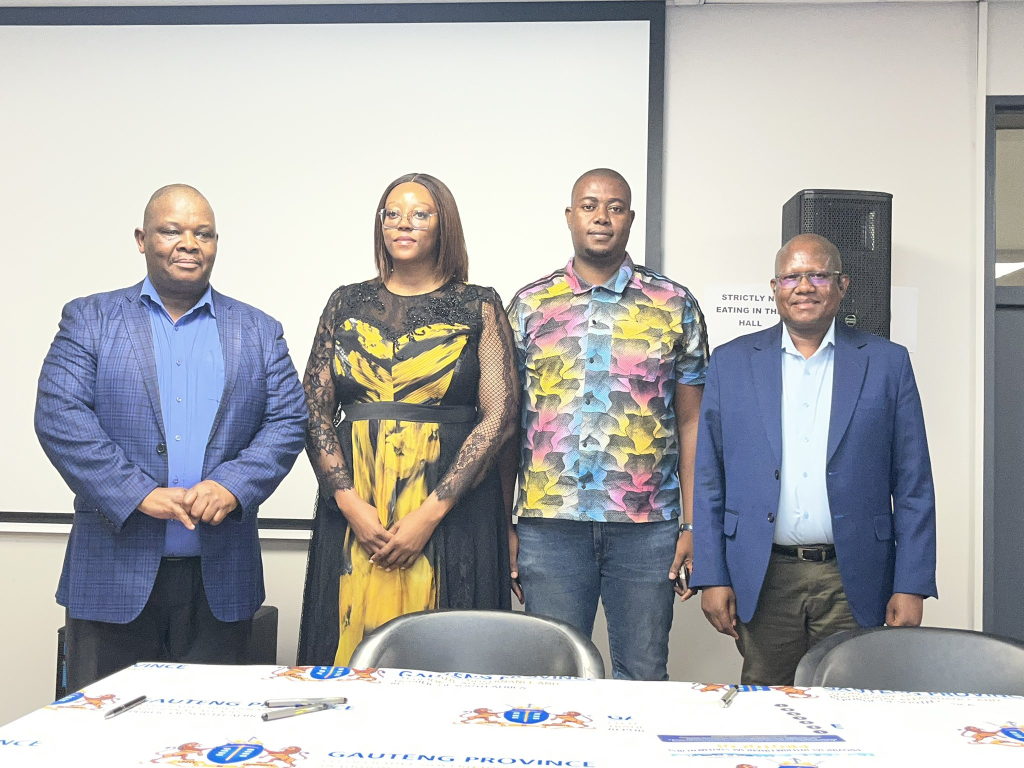
Gauteng Treasury Acting Deputy Director-General Peter Msiza said the province wanted municipalities to stop treating annual financial statements as a year-end exercise.
He said the problem was not necessarily municipalities failing to submit their annual financial statements, but the quality of those statements.
“Gauteng doesn’t have a submission of annual financial statements problem; however, a challenge with submission of AFS free from material misstatements and errors exists,” Msiza said.
He said municipalities needed to change their approach and make financial reporting a continuous activity.
Daily, weekly and monthly reconciliations should be conducted to ensure municipal financial systems could produce reliable information at any point during the year, he said.
The interim statements would give municipalities an earlier picture of their financial standing and allow management to respond to problems before the end of the financial year.
“They will assist with management agility towards service delivery; our strategies and efforts will be well developed and supported by correct data, leading to well informed strategies to deal with financial matters of Gauteng municipalities,” Msiza said.
He said Gauteng Treasury would also roll out financial management training, including targeted training on Generally Recognised Accounting Practice (GRAP) and asset management.
The province would strengthen its monitoring of strategies aimed at reducing unauthorised, irregular and fruitless and wasteful expenditure.
This would include capacity-building workshops covering UIFW management, bid committee processes and the functioning of Municipal Public Accounts Committees and disciplinary boards.
Msiza said Treasury was also preparing a second phase of its hands-on support programme, through which suitably qualified advisers would be placed in municipalities that needed additional assistance.
“We are currently busy with our procurement processes so that we can continue with our second instalment of the hands-on support programme so that we can place Suitably Qualified Advisors at municipalities that need them the most,” Msiza said.
INSIDE METROS