
By Bhekizenzo Zonele and Zanoxolo Jozana
The ANC is seeking to retain its dominance in Limpopo as the EFF looks to capitalise on voter frustration over unemployment, water shortages and failed municipal services in Wednesday’s local government elections.
More than three million registered voters are eligible to cast their ballots at about 3,315 voting stations across the province, where the African National Congress (ANC) faces a challenge from the Economic Freedom Fighters (EFF), its main opposition rival.
The ANC has historically dominated municipal politics in Limpopo, but persistent service delivery failures, unemployment, and dissatisfaction with local government have become central issues in the election campaign.
In the 2021 local government elections, the ANC secured 58.3% of ward votes in Polokwane — the provincial capital — compared with the EFF’s 22%. The ANC won 36 of the municipality’s 45 wards and secured 56 of the 90 council seats, giving it a comfortable majority.
The EFF won four wards, the same number as the Democratic Alliance (DA), while an independent candidate secured one.
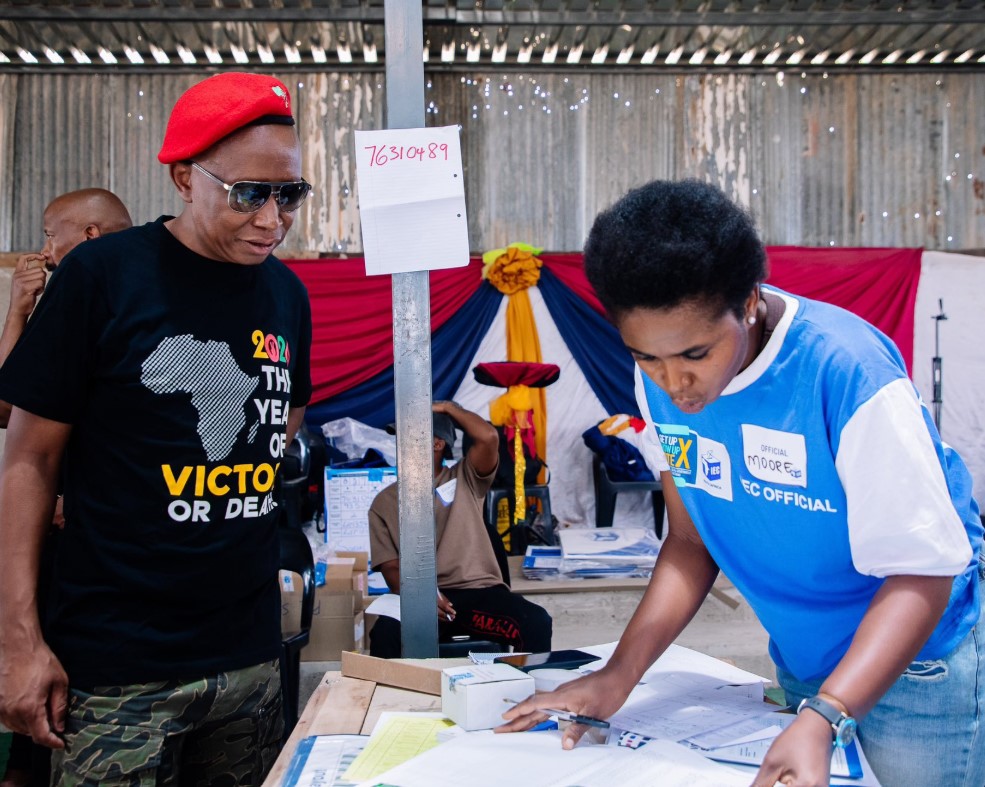
Polokwane is also politically significant for the EFF because its leader, Julius Malema, was born in Seshego, where the party enjoys considerable support.
Malema cast his vote at Mponegele Primary School in Seshego, saying: “I feel very happy, especially with IEC processes, they have subdivided our voting stations because they say the number is beyond 4000, so they’ve allocated according to alphabetical order, which makes the process smooth and quicker,” Malema said.
He did, however, raise concerns about crime, water shortages and youth unemployment.
Young voters have emerged as an important constituency, with many expressing frustration over unemployment and limited opportunities.
Unemployment remains a major challenge in Limpopo, where Statistics South Africa recorded an official unemployment rate of 32% in the second quarter of 2026.
The difficulties facing young jobseekers have added to concerns about the province’s economic prospects, with political parties promising to expand employment opportunities and improve infrastructure.
In municipalities such as Greater Giyani, residents have repeatedly complained about unreliable water supplies, despite years of government interventions and infrastructure projects intended to address shortages.
The EFF launched its 2026 local government election manifesto on 25 July at Thohoyandou Stadium in Limpopo, promising to transform municipalities into centres of economic production, expand access to free basic services and address land access.
The party also committed to ensuring that women occupy at least 50% of leadership positions in municipal structures.
The ANC’s election campaign has focused on improving basic services, including water and electricity, upgrading municipal infrastructure and addressing the rising cost of living.
However, the governing party also faces the challenge of convincing residents that it can deliver on commitments made during previous election campaigns.
The difficulties political parties face in attracting younger voters were highlighted in research released by Ipsos on Tuesday, 3 November.
The national survey found that 50% of registered voters aged between 18 and 24 believed no political party represented their views, while 70% agreed that politicians could not be trusted.
Among young registered voters who expressed a party preference, the ANC and EFF were tied at 17% support each, followed by the MK Party at 15% and the DA at 13%.
Although the findings are not specific to Limpopo, they highlight the challenge facing political parties attempting to attract younger voters who feel disconnected from the political system.
Meanwhile, the elections in Limpopo have been accompanied by arrests relating to alleged violations of electoral laws during special voting.
Police arrested a 32-year-old man on Tuesday after two voters allegedly photographed their marked ballot papers at Chuchekani Primary School in the Humulani settlement near Lulekani on Monday, 2 November.
The incidents occurred during special voting.
According to police, one of the voters subsequently posted an image of his marked ballot paper on social media.
The presiding officer reported the incidents to the IEC, which advised that a criminal case be opened.
Police confirmed that one suspect had been arrested and that they were still searching for the second man.
In a separate incident, another 32-year-old man was arrested after allegedly photographing his marked ballot paper at Masakhane voting station in Ga-Willy Village and sharing the image on WhatsApp.
Limpopo police commissioner Lieutenant General Jan Scheepers warned that photographing a marked ballot paper violated the secrecy of the vote and constituted a criminal offence.
“Members of the public must respect electoral processes. Anyone who contravenes the Electoral Act will be arrested and brought before the court. We will continue to ensure that elections are conducted in a safe, secure, and fair environment.”
Police have urged voters to comply with electoral laws while officers remain deployed across the province to maintain order and ensure that residents can exercise their democratic rights.
INSIDE METROS