By Johnathan Paoli
Gauteng Premier Panyaza Lesufi has alleged that disruptions to water and electricity supplies in the province could be deliberate attempts to influence voters in Wednesday’s local government elections, despite months of preparations to prevent service delivery failures.
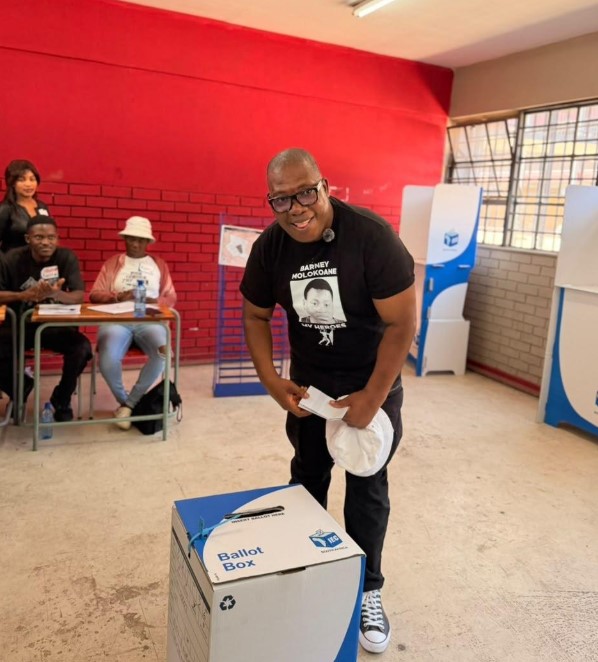
Speaking after casting his ballot at Thuto Ke Maatla Secondary School in the Maokeng section of Tembisa, Lesufi said the provincial government had spent six months working with municipalities to ensure essential services remained operational ahead of the elections.
“It’s a deliberate attempt to sway the views and emotions of our people,” Lesufi said.
“It’s frustrating; I must be honest with you. We planned for this day, and we literally, for the last six months, we’ve been meeting every Tuesday to ensure that there’s electricity, there is water, that refuse is collected. But it’s clear, there are some people that had other plans. And I’m on the side of the municipalities on this one, to be quite frank. They’ve done everything possible. They cooperated with us, they put up the system,” he said.
Lesufi also raised concerns about the deliberate removal of traffic lights and street lights, as well as alleged tampering with electricity infrastructure.
His allegations come as parts of Gauteng continue to experience severe water and electricity disruptions, adding to residents’ frustrations as they head to the polls.
Lesufi did not identify those he believed were responsible for the alleged interference.
He said one of the incidents that had particularly concerned him involved a pumping station reportedly struck by lightning, contributing to water supply difficulties.
According to Lesufi, the facility was repaired late on Tuesday night, although reservoirs would take time to replenish before normal supply could resume.
The premier said he was personally engaging with national water officials, municipal managers and executive mayors to resolve the disruptions.
He said it was an indictment of the province’s service delivery challenges that residents were having to queue for water tankers instead of joining queues at voting stations.
Despite the disruptions, Lesufi urged residents not to boycott the elections over their frustrations with municipal services.
“Staying away is not an option. Take into consideration the many challenges that we still need to attend to. We need to be encouraged to know as government whether we’re on the right track or not. And we can only know if people express their views. So if you don’t express your view, it will be extremely difficult for us to know what are the things that are making you happy or what are the things that are not making you happy,” he said.
Lesufi said he remained confident that voters would turn out in large numbers, despite the service delivery problems and challenges experienced at some voting stations.
He said Thuto Ke Maatla was one of the province’s biggest voting stations, adding that he had been informed that residents had arrived early to cast their ballots.
The premier also reflected on his personal connection to the school, which he said had played an important role in his childhood and education.
“I just want to thank the IEC for the preparations and arrangements. This school, before it was built, was an open veld. I used to play here when I was a kid. And when I grew up, this was my library. We used to come here to study,” he said.
“Even when I was writing my matric, I knew all these classrooms. So that is why I insisted on voting yes, just to retain that memory and that legacy. And I’m quite impressed with the development, the cleanliness, and how the school has grown. So I’m happy that I’ve cast my vote where I was born and where my life has been shaped and sharpened. So it’s just mixed memories, but I’m quite happy,” Lesufi added.
He also invoked the Freedom Charter, saying that voters, rather than political parties, should determine who governs.
“We’ve been subjecting ourselves to democratic principles, democratic choices, and saying the people shall govern. We didn’t say the ANC shall govern when we adopted the Freedom Charter. We said the people shall govern. This simply means the choice must be in the hands of the people. And that’s the only way to know if our people are happy or not happy, by going through this process,” he said.
INSIDE METROS