By Jonathan Erasmus
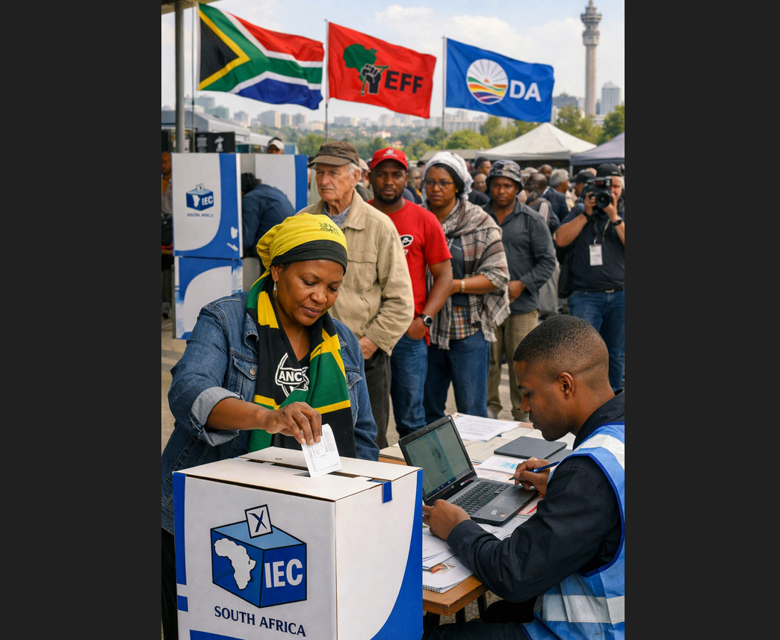
As South Africans queue to vote for their local councillors and preferred political parties to lead their municipalities, it is important that they moderate their expectations of what the new governments can achieve.
Because despite the soapbox speeches and election promises, the reality is that many communities will continue doing the work of their municipalities, not because they want to, but because they have little choice.
While elections matter, the rise of community activism is probably one of the biggest political stories in South Africa right now, and it is gaining momentum every day.
Across the length and breadth of the country, communities are taking their rightful place in holding government accountable, whether over water, rural violence, electricity, roads, border security, crime, grime or gender-based violence.
As an observer of a cause, you may not agree with some of these community groups or, more importantly, their tactics, but their actions are born out of frustration with the state’s inability to govern responsibly.
And the polls are a reflection of this shift in how South Africans view government. They reveal a voting public that is becoming more agile in understanding problems, allocating blame and, importantly, demanding solutions.
The latest metropolitan polling suggests the DA is well positioned to improve its standing in several major cities, while the ANC faces further electoral losses.
Surveys place the DA ahead of the ANC in Johannesburg, Tshwane, Cape Town, Ekurhuleni and Nelson Mandela Bay, although the margins vary considerably between pollsters.
The DA will be particularly encouraged by its performance in Johannesburg and Tshwane, where polling suggests it has consolidated support, while Cape Town remains a stronghold.
For the ANC, the polling paints a far more troubling picture of a party struggling to arrest its long-term electoral decline.
Once the dominant political force across South Africa’s metropolitan municipalities, it now trails the DA in several major urban centres and faces a formidable challenge from the MK Party in eThekwini.
The significance extends beyond individual municipalities. The surveys suggest the ANC’s weakening appeal among urban voters has become an entrenched political problem. Even where it remains competitive, the party faces increasingly fragmented councils and greater dependence on coalition partners to exercise power.
Who runs municipalities is important, but who runs the country is an entirely different matter, and that is where the DA’s attention is likely focused.
The latest national polling averages put the ANC at 31% and the DA at 27%, narrowing the gap between the two parties to just four percentage points.
Compared with the 2021 local government elections, this represents a decline of 16.5 percentage points for the ANC, which secured 47.5% of the vote, while the DA has gained 7.1 points from its previous 19.9%.
If reflected in the election results, these figures would represent a significant boost for the DA and a further setback for the ANC.
And yet the clever money is on the DA and ANC entering a coalition in the City of Johannesburg should neither party be able to assemble a stable alternative government.
And Johannesburg may not be the only municipality where such an arrangement becomes necessary.
If this happens, we could find ourselves with DA-led councils in which the ANC becomes the junior coalition partner.
Such an arrangement would undoubtedly be fraught with political risks.
Yet there are considerable upsides.
For the DA, successful municipal coalitions could strengthen its position within the Government of National Unity (GNU), providing leverage to negotiate greater cabinet representation, influence over foreign policy and an opportunity to repair South Africa’s strained relationship with the United States.
For municipalities, cooperation between the two largest parties could provide something desperately needed: stable political leadership.
Rebuilding dysfunctional municipalities requires continuity, financial discipline and the political will to make difficult decisions. None of this is possible when coalition governments collapse or are beholden to multiple single-seat junior partners.
It will undoubtedly be rocky, but stability has to start somewhere.
Such an arrangement could also consolidate the ANC and DA as the country’s two largest parties, reducing the influence of smaller parties that have frequently held the balance of power in fragmented councils.
Elections are ultimately about securing office and exercising power.
And come 2029, the DA may well find itself leading a national coalition, with the ANC as its junior partner.
The next three years could provide the perfect dry run.
But none of this will deliver meaningful change without sustained community pressure.
Communities need to become the opposition voice. We need to be testing power.
In many countries, political parties largely dictate the direction of government. In South Africa, however, communities are increasingly asserting their influence over the political agenda, demanding accountability and refusing to accept that casting a vote is the extent of their democratic responsibility.
This is democracy in action.
The struggle for better services, accountable leadership and functioning municipalities cannot end at the ballot box.
And judging by the growing determination of communities across South Africa, I don’t believe civil society will allow that to happen.
INSIDE POLITICS