
By Thapelo Molefe
Residents of Bronkhorstspruit and surrounding communities will head into Wednesday’s local government elections without confirmation that their tap water is safe to drink, despite the City of Tshwane reporting progress in rehabilitating the troubled water treatment works.
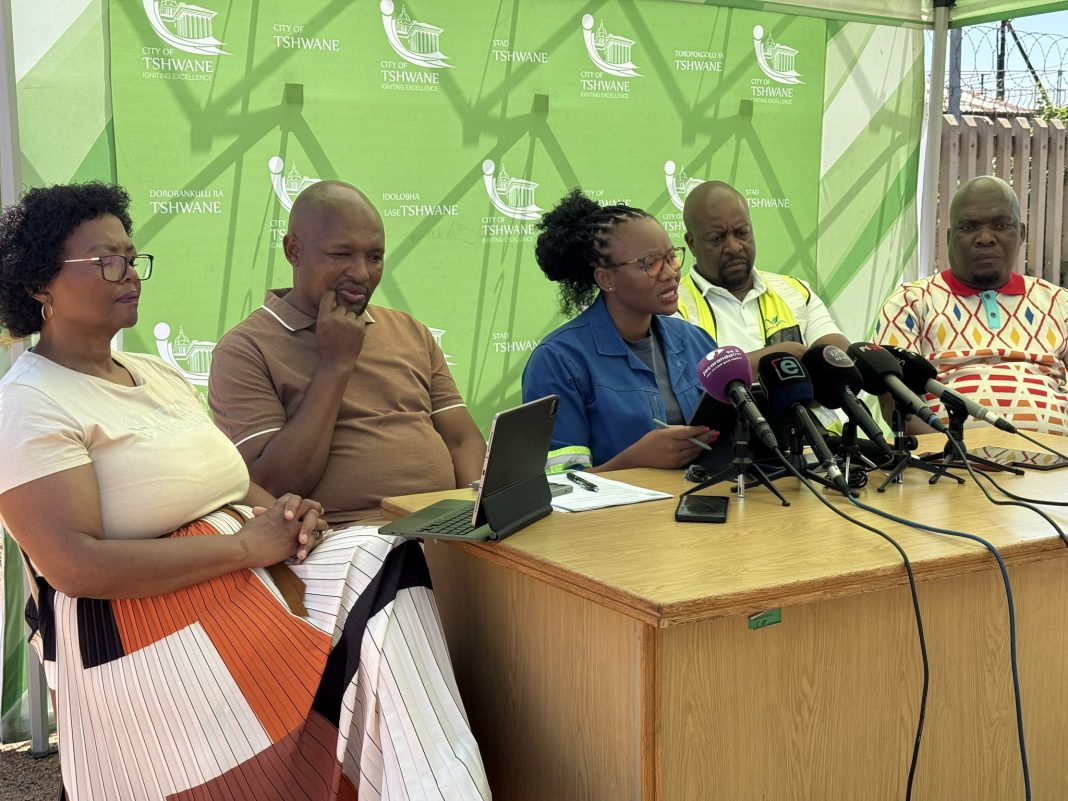
Tshwane mayor Nasiphi Moya on Tuesday warned residents against using water currently being pumped into reservoirs, saying it was still undergoing disinfection and had not been cleared for consumption.
The warning comes more than three weeks after a water crisis left households and businesses facing prolonged supply disruptions, following laboratory tests that detected bacterial contamination at the Bronkhorstspruit Water Treatment Works.
In a post on X, Moya urged residents not to be misled by water that appeared clean.
“While water is being pumped to reservoirs in Bronkhorstspruit and surrounding areas, we urge residents not to use it. This stream of water forms part of the ongoing disinfecting processes,” she said.
Moya confirmed that water-quality tests had detected low levels of E. coli in water discharged during the cleaning of the clear-water sump.
She said disinfection procedures would be repeated until laboratory tests confirmed that the contamination had been eliminated.
“While the treatment works is now progressing through commissioning, this does not automatically mean that water is ready for consumption,” Moya said.
The City appointed Rand Water as its implementing agent on 21 October to lead the rehabilitation and stabilisation of the treatment works.
Rand Water’s initial assessment identified extensive sludge accumulation in clear-water tanks, dissolved air flotation units and filters, as well as problems with pumping and filtration equipment, chemical management, maintenance and the availability of critical spare parts.
Over the past two weeks, technical teams have cleaned treatment infrastructure, removed accumulated sludge, repaired equipment and progressively restored filtration and chlorination processes.
The second phase of the treatment works was commissioned for flushing and disinfection on 28 October, followed by further treatment and shock chlorination a day later.
On Monday, the plant was recommissioned to supply treated water to the Ekandustria reservoirs for further shock chlorination. Cleaning has also been completed at the Zithobeni and Ekandustria reservoirs.
However, outstanding work includes final shock chlorination, the installation of a valve at Zithobeni, further flushing and laboratory verification.
Moya said the City hoped to complete much of the remaining work in the coming days, subject to technical processes and water-quality verification.
Even after laboratory clearance, residents should expect a gradual restoration of supply as reservoirs refill and pipelines repressurise. Higher-lying and more distant communities could receive water later than others.
Moya said Rand Water’s immediate responsibility was to restore and stabilise the treatment works before transferring operational responsibility back to the City.
She added that she had engaged the City Manager to ensure that rehabilitation, public-health monitoring and communication continued beyond her final consolidated briefing ahead of the elections.
The crisis has also drawn attention to broader failures in municipal water infrastructure, with Gauteng municipalities continuing to grapple with widespread water losses and shortages.
In findings released on Monday, the South African Human Rights Commission (SAHRC) said municipalities were losing billions of rands through leaking infrastructure, despite sufficient water resources being available to meet current demand.
According to the commission, Tshwane loses 39% of its water, valued at approximately R1.7 billion annually, while Johannesburg loses 44.8%, worth R2.82 billion.
The commission called for urgent infrastructure maintenance, improved water storage, stronger financial accountability and an end to excessive reliance on water tankers.
For Bronkhorstspruit residents, however, the immediate concern remains when the water flowing from their taps will be safe to drink.
INSIDE METROS