By Bhekizenzo Zonele
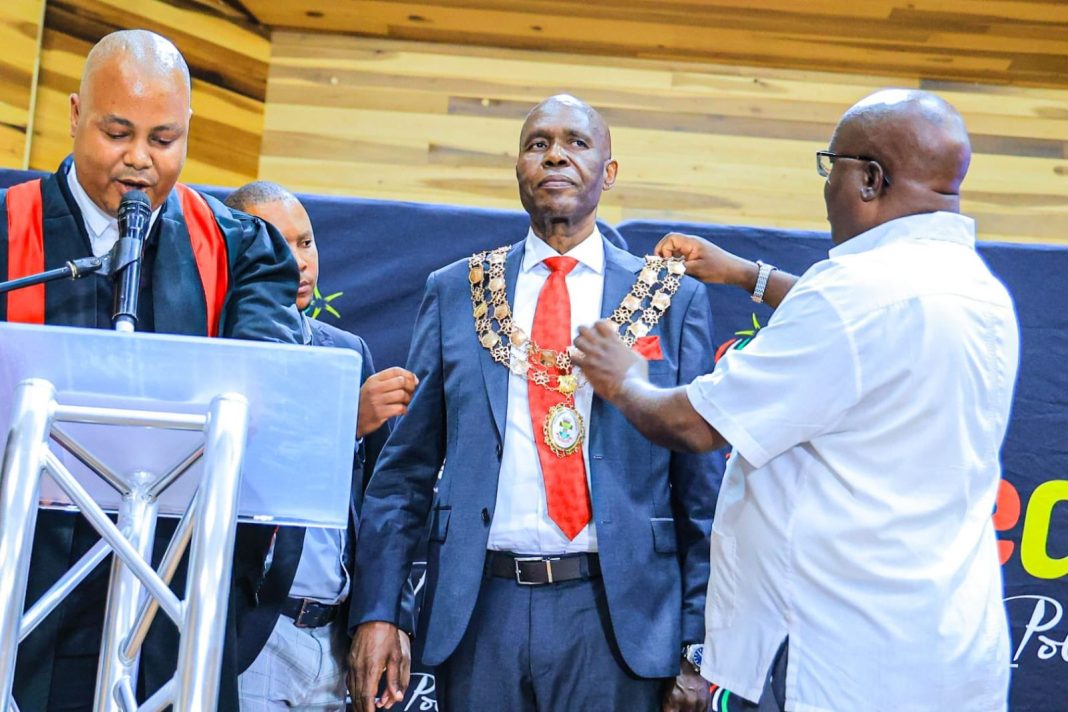
The ANC has retained control of the Polokwane Municipality after John Mpe was re-elected as executive mayor with the support of the Democratic Alliance (DA), following the party’s loss of an outright majority in the November 4 local government elections.
Mpe secured 55 of the 90 votes cast during a council sitting, giving him the majority needed to return to the mayoral office.
His re-election follows political negotiations in the 90-seat council, where the ANC emerged as the largest party with 37 seats, nine short of the 46 needed for an outright majority.
The DA, which secured 11 seats, backed Mpe’s return, giving the two parties a combined 48 seats and a working majority in the council.
The election follows a breakdown in negotiations during the municipality’s first council sitting on November 18, when political parties failed to reach an agreement on candidates for the positions of executive mayor, speaker and chief whip.
Newly elected Speaker Lizel Whitehead, an ANC councillor, presided over the mayoral election at Jack Botes Hall in Polokwane.
Announcing the outcome, Whitehead said: “In accordance with the Municipal Structures Act, I hereby declare Councillor Mosema John duly elected as the Executive Mayor of Polokwane Local Municipality.”
Mpe returns to lead the municipality after serving as executive mayor in the previous term.
The outcome marks a shift in Polokwane’s political landscape, with the ANC now relying on support from other parties to retain control of the municipality after previously governing with an outright majority.
Mpe’s return comes as the municipality faces persistent challenges, including water shortages, inadequate wastewater treatment, infrastructure maintenance and financial management.
Water provision remains a major concern, particularly in rural communities.
Reports presented to the municipal water and sanitation portfolio committee showed that 42 of the municipality’s 45 wards had reported water availability problems, with 19 experiencing persistent shortages.
Residents have been forced to rely on water containers and alternative sources when municipal supplies are interrupted.
The municipality is also under pressure to complete its long-delayed regional wastewater treatment works project, which was initially expected to be completed in February 2020.
The project has encountered contractor and implementation problems, with repeated delays raising concerns about project management and the municipality’s ability to deliver essential infrastructure.
Financial management is another challenge facing the incoming administration.
In a February 2026 assessment of the municipality’s 2024/25 annual report, the DA raised concerns about water and electricity losses, infrastructure maintenance and irregular expenditure.
These issues will test the new administration’s ability to translate its political agreement into improved service delivery and better management of municipal resources.
Mpe’s re-election also comes after the ANC in Limpopo called on its newly deployed councillors to prioritise service delivery, accountability and good governance.
ANC Limpopo provincial secretary Reuben Madadzhe said the party expected its councillors to uphold ethical standards and serve communities responsibly.
“The ANC expects all the deployed comrades to discharge their responsibilities with discipline, integrity, humility and clear understanding that public office is a responsibility entrusted to them by our people,” Madadzhe said.
He said communities expected municipalities to function effectively, provide reliable services, manage public resources responsibly and demonstrate ethical leadership.
The new council will face pressure to turn the ANC-DA political arrangement into tangible improvements in water provision, sanitation, infrastructure and financial accountability.
INSIDE POLITICS