- Advertisement -

Municipalities must become “economic enablers” to drive growth, says Hlabisa

- Advertisement -

Must read

By Johnathan Paoli

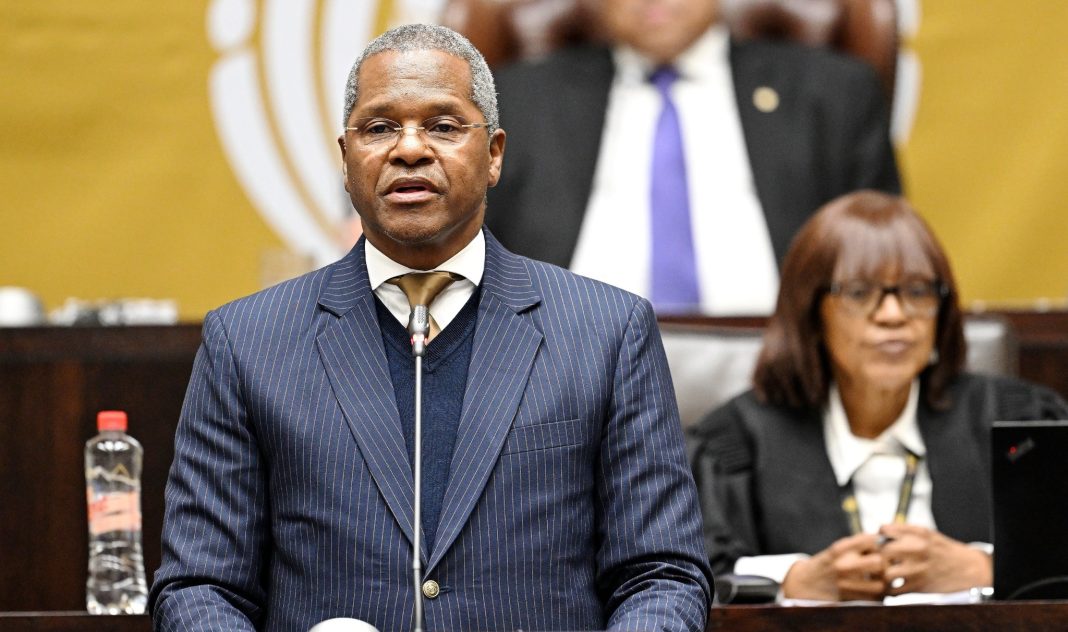
Cooperative Governance and Traditional Affairs (COGTA) Minister Velenkosini Hlabisa has called on municipalities to become “economic enablers” capable of driving growth, cutting red tape and unlocking small business potential.

Speaking at the National Local Economic Development (LED) Summit on Wednesday in Ekurhuleni, Hlabisa argued that the future of local development fundamentally depended on municipalities moving beyond administration to actively facilitating economic activity.

ALSO READ: Tshwane CFO Gareth Mnisi suspended

“This Summit comes at a defining moment for local government and local economic development in South Africa. It is therefore fitting that my contribution today focuses on the review of the White Paper on Local Government and how this reform process is intended to reposition municipalities as developmental institutions that actively drive local economies,” Hlabisa said.

The minister identified the “core problem” as a set of interlinked problems including misalignment between municipal mandates and funding instruments and weak integration between planning, budgeting and implementation; fragmented intergovernmental investment; and limited municipal capability to unlock economic activity through land use, infrastructure and regulation.

“Where municipalities struggle to provide infrastructure, streamline licensing, manage land use or coordinate investment, local economies stagnate, and small enterprises fail to grow,” he said.

He said the ongoing review of the White Paper was a “strategic rest” in attempting to change how municipalities are structured and operate.

“Municipalities must function as economic enablers, not administrative bottlenecks,” Hlabisa said.

Hlabisa anchored his argument in constitutional obligations, noting that local government is mandated to promote both social and economic development.

ALSO READ: eThekwini adds 13 K9 handlers to Metro Police

However, nearly three decades after the White Paper’s adoption, he said municipalities are still falling short due to systemic constraints.

The review process now underway, he added, seeks to realign mandates, funding and implementation.

“It is about ensuring that planning enables investment, infrastructure supports enterprise, regulation reduces barriers, and intergovernmental coordination delivers at scale,” Hlabisa said.

A key focus is addressing the financial distress facing municipalities, which he said undermines infrastructure investment and service delivery.

“The objective is not simply to inject more funding, but to align mandates, resources and accountability so that municipalities can sustainably support local economies,” he said.

Hlabisa highlighted reforms to the District Development Model (DDM), which aims to improve coordination between national, provincial and local government through joint planning and budgeting.

Small Business Development Minister Stella Ndabeni reinforced the call for municipalities to play a central role in economic transformation, particularly in supporting micro, small and medium enterprises (MSMEs).

Ndabeni similarly called for a “mindset shift” in how local economic development is approached, urging municipalities to actively reduce barriers to business.

“Being an economic enabler means improving the ease of doing business, through reducing licensing turnaround times, reforming municipal bylaws that constrain trading and zoning, improving access to wayleaves for digital infrastructure, and addressing regulatory bottlenecks that limit business expansion,” she said.

Ndabeni praised the National Development Plan as a wide-ranging policy and programme framework aimed at supporting small businesses, including funding instruments, incubation programmes and regulatory reforms; but stressed that national interventions alone would not be enough.

While noting improvements in energy, logistics and macroeconomic stability, she warned that unemployment, inequality and economic exclusion remain severe constraints.

“The reality is clear. South Africa’s growth and jobs challenge will be won or lost at a local level. Whether it is a local spaza shop, a farmer producing for export, a high growth tech startup, or a community cooperative, the trajectory of our economy is ultimately shaped in our municipalities and districts,” she said.

She said that municipalities are the primary interface between government, businesses and communities and therefore critical to enabling economic activity.

Ndabeni said there was a need for better spatial and economic planning, including the development of township economies through dedicated commercial zones and production hubs.

“Our goal must be clear, to build municipalities that are capable, accountable, and truly developmental institutions that act as economic enablers, not merely administrative bodies,” Ndabeni said.

The minister framed the summit as a call to action to “Re-engineer Local Economies”, adding that policy outcomes must be grounded in the lived realities of entrepreneurs.

“Those operating in townships, rural areas, and urban centres experience firsthand the barriers we seek to dismantle. Their voices must be heard,” she said.

Meanwhile, Gauteng Acting Premier Nomantu Nkomo-Ralehoko positioned the province as a testing ground for the shift toward enabling local economies.

She said the provincial government is advancing an Economic Growth and Development Plan 2030 aimed at driving inclusive growth, reindustrialisation and job creation.

According to Nkomo-Ralehoko, the plan focuses on tackling structural inequality, revitalising township economies and empowering small businesses, while also strengthening infrastructure and skills development.

Through partnerships with the private sector and targeted empowerment programmes, including B-BBEE, the province is working to “build a resilient, inclusive economy for all”, she said.

INSIDE METROS

- Advertisement -

More articles

LEAVE A REPLY

Please enter your comment!
Please enter your name here

AVBOB STEP 12

Inside Metros G20 COJ Edition

JOZI MY JOZI

Inside Education Quarterly Print Edition

- Advertisement -

Latest article