
spot_img

Zille pitches Joburg rescue plan as Eskom debt deadline looms

-Advertisement-spot_img

Must read

By Johnathan Paoli

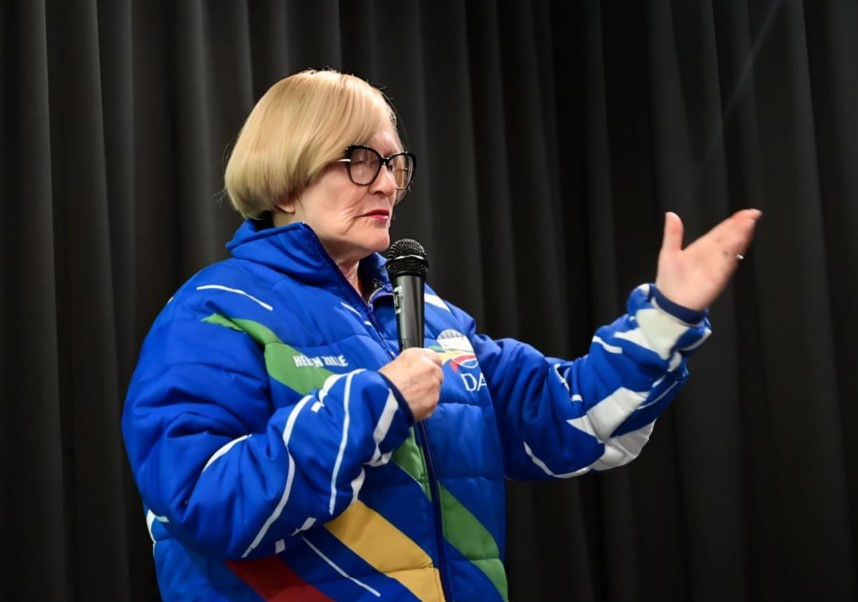
Democratic Alliance Johannesburg mayoral candidate Helen Zille has said a DA-led administration would seek an urgent Treasury-backed rescue plan for the embattled city.

Addressing residents at a community meeting hosted by the Melville Residents Association on Tuesday night, Zille said South Africa’s economic hub could still be rebuilt, but added that restoring its finances, infrastructure and governance would require intervention from national institutions, the private sector, and international funders.

Eskom said last month that the city and City Power already owed it R5.255 billion in arrears, excluding a further R1.582 billion current account payment due on 5 June.

Zille said the city’s financial position was far worse than official figures suggested.

“Joburg’s debt is currently 65% of its revenue. And it should never be more than 45% of its revenue. That’s where we are now. And that tells you how shocking the state is,” she said.

She accused the current administration of manipulating financial figures and creating new senior management posts ahead of the elections, saying this was part of a culture of corruption, mismanagement, and “last-lap looting”.

“They made provision for 2,000 more senior managers. They’re already massively top-heavy,” she said.

She said a DA-led administration would immediately bring together strong players to develop a financial rescue plan for the city.

“The first thing we will do is get together in the same space, the Johannesburg task team in the National Treasury, the Joburg recovery plan under Operation Vulindlela in the Presidency, and then I want to bring in the Auditor-General as well,” she said.

She said the city would also need to seek funding from international institutions and expand public-private partnerships to rehabilitate essential services.

“We will then first of all have to get a lot of money from the Presidency and the resource mobilisation group,” she said. “Then we will have to go very quickly into public-private partnerships for all the major trading services,” she said.

Zille said Johannesburg’s recovery would depend on restoring confidence among investors, residents and businesses after years of deterioration in basic services.

“We want to get people who are prepared to invest and grow the economy in Joburg. We want to get them loving Joburg, seeing their future in Joburg. And that will bring 200,000 new jobs to Joburg, we are hoping,” she said.

Residents raised concerns about water outages, electricity disruptions, deteriorating roads, and weak service delivery across the city.

Zille acknowledged that reliable water and electricity would not be restored quickly, even under a DA administration, saying the scale of the collapse meant a turnaround would take years.

“When I say reliable water and electricity for all residents, it sounds as if it should be a given. It should be taken for granted. It isn’t. It’ll take us five years if we push as hard as we can to fulfil that pledge,” she said.

She criticised the current administration’s “inadequate” infrastructure targets, saying Johannesburg’s water network required a far more ambitious pipe-replacement programme.

“They were boasting that their target was to replace 15 kilometres of water pipe and then actually replace 20. They should be replacing nearly 200 kilometres of water pipe a year, given the crisis that they’re facing,” she said.

Zille said Johannesburg’s decline was not limited to finances and engineering systems, but extended to planning, law enforcement and urban management.

On urban planning, she said the city needed responsible densification as more people moved into cities, but added that it should not be done in a way that damaged established residential communities.

“Our cities need to densify because more and more people are urbanising. We cannot have total urban sprawl,” she said.

However, she said suburbs such as Melville were already relatively dense and suggested that future development should focus on larger properties elsewhere in the city.

“Melville is quite a densified suburb to begin with. I wouldn’t actually start anywhere near Melville. I would start in those huge properties that I see in Houghton,” she said.

Housing hijackings and illegal occupation of buildings also emerged as major concerns during the meeting.

Zille said weak enforcement and legal obstacles had contributed to the problem. The city needed to act more firmly against criminal networks operating in the built environment, she said.

“We’ve got to deal with the hijacking of buildings first. That I’m absolutely determined to stop.”

She called for greater use of municipal bylaws and criticised the Johannesburg Metropolitan Police Department for failing to enforce regulations effectively.

“When I went to speak to the municipal courts, they said to me, ‘We’ve got no cases because the Metro Police never apply the bylaws.’ That’s got to change,” she said.

Zille said organised criminal syndicates had taken advantage of the collapse of municipal systems, pointing to the so-called “water mafia” and other networks that profit when public services fail.

“There are lots of mafias. Everywhere there’s money to be made you’ll find the municipal systems break down and then the service providers have to be brought in from outside.”

She said cable theft and vandalism were major contributors to infrastructure collapse, and that the deterioration of public facilities in areas such as Ennerdale was simply a reflection of overall governance failure.

Zille told residents to become more politically active ahead of the local government elections on 4 November, saying voter turnout would be critical to changing the city’s direction.

“We got in 481,000 people voting for the DA on both ballots. All we need is 9,000 more. Our big task in this election is to get them registered and get them out to vote,” she said.

Drawing comparisons with the DA’s governance record in Cape Town, Zille said Johannesburg’s recovery would require ambitious targets, long-term planning and sustained political will.

“I always, in government, set the most stretched targets I can. In Cape Town between 2021 and now, they’ve attracted 400,000 new jobs,” she said.

INSIDE METROS

-Advertisement-spot_img

More articles

LEAVE A REPLY

Please enter your comment!
Please enter your name here

Inside Education Quarterly Print Edition

spot_img

CATHSSETA

spot_img

QCTO

spot_img

AVBOB STEP 12

spot_img

Inside Metros G20 COJ Edition

spot_img

JOZI MY JOZI

spot_img

Inside Education Quarterly Print Edition

spot_img

Latest article