By Thapelo Molefe
The Mpumalanga provincial government has approved plans to gradually insource cleaning services across government departments, saying the move will create jobs, improve working conditions and reduce reliance on outsourced contracts.
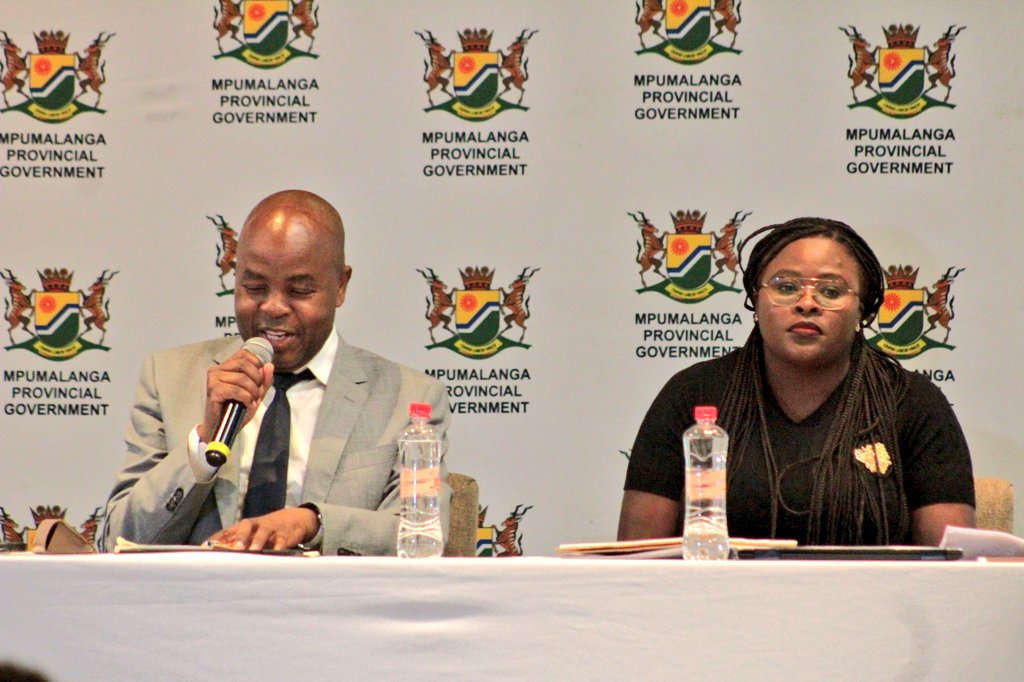
The decision was taken during a recent meeting of the Mpumalanga Executive Council (EXCO), which approved a report analysing the costs and benefits of bringing cleaning services in-house as part of the provincial government’s priorities under the seventh administration to drive inclusive economic growth, reduce the high cost of living and build a capable, ethical and developmental state.
According to EXCO, the report showed that insourcing would offer greater long-term value than relying on outsourced service providers.
“EXCO noted that insourcing will provide direct employment opportunities for the unemployed, thus restoring their dignity, provide job security, and fair remuneration to the workers who will maintain government facilities daily,” the province said in a statement.
“It was further observed that insourcing strengthens in-house operational capacity and aligns routine support functions with public service values and accountability,” EXCO said.
The Executive Council approved the report and directed provincial departments to roll out the implementation of the insourcing programme in line with available budgets and detailed cost-benefit analyses.
The meeting also approved the Mpumalanga Provincial Research Agenda (PRA), a five-year strategic plan that will guide research priorities and resource allocation in the province from 2026 to 2030.
The strategy identifies education, human development, skills development and inclusive economies as priority areas for research. It also places a strong focus on energy research, given Mpumalanga’s strategic role in South Africa’s electricity sector.
The provincial government noted that Mpumalanga is home to 12 of the country’s 30 power stations, making it critical to invest in research that supports sustainable energy production and future electricity demand.
“EXCO noted the critical need of investing in energy research projects, to generate evidence-based solutions that will guide the province’s sustainable energy supply for the growing demand,” the statement said.
The Executive Council further resolved that research into climate change and disaster management should be prioritised, noting that the province is increasingly vulnerable to natural disasters that threaten communities, infrastructure and the environment.
“It was resolved that the province is prone to natural disasters with devastating effects to human beings, nature and infrastructure. Therefore the research agenda is crucial to produce evidence-based responses to disasters caused by the climate change phenomenon,” EXCO said.
In addition, EXCO approved a review of the province’s five public entities – the Mpumalanga Tourism and Parks Agency (MTPA), Nkomazi Special Economic Zone (SEZ), Mpumalanga Economic Growth Agency (MEGA), Mpumalanga Economic Regulator (MER) and Mpumalanga Regional Training Trust (MRTT).
The review assessed the structure and performance of the entities since their establishment and is intended to eliminate functional duplication, improve efficiency and enforce fiscal discipline across provincial institutions.
INSIDE METROS