By Levy Masiteng
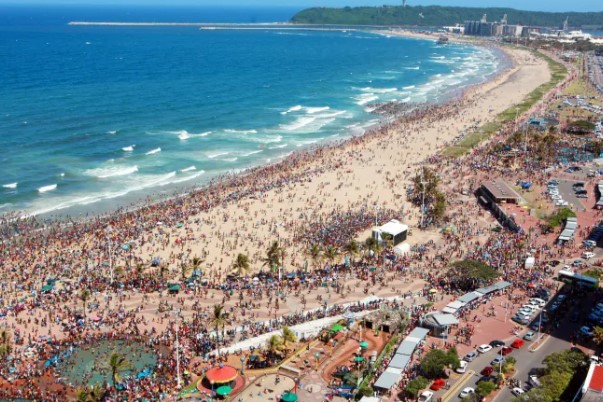
Business confidence in Durban fell below neutral for the first time in two years in the second quarter, as a deepening construction slump, higher operating costs and weaker sentiment across several major industries darkened the outlook for the city’s economy.
The Durban Business Confidence Index fell to 48.82 in the three months through June from 50.63 in the first quarter, a decline of 3.57%, according to a report released last week. The index was 6.83% lower than in the same period last year. A reading below 50 indicates businesses lack confidence in the local economy.
“For the first time since 2024Q2, the index has fallen below the neutral zone, indicating a lack of confidence in Durban’s economic prospects,” the report said.
The construction industry recorded the sharpest deterioration, with confidence falling almost 20% from the previous quarter and 41% from a year earlier.
The decline suggested “worsening conditions with no signs of recovery in the short- to medium-term,” according to the report.
Manufacturing confidence declined 7% quarter on quarter as higher fuel prices increased production costs. The sector nevertheless performed better than a year earlier, with its confidence index rising 13.87% compared with the second quarter of 2025.
Confidence among agriculture, hunting, forestry and fishing businesses fell about 10% from the previous quarter, which the report attributed to higher fertiliser prices and adverse weather conditions.
Community, social and personal services recorded a 19.83% quarterly decline, with its index dropping to 40.56 from 50.59.
Transport-sector confidence fell 4.19% to 56.08 and was almost 10% lower than a year earlier. The report linked the deterioration to geopolitical tensions and their effect on fuel costs.
Nationwide drop
Durban’s decline was less severe than the nationwide drop. The Bureau for Economic Research’s national business confidence index fell eight points to 39 during the quarter, leaving the city’s reading above the national measure.
The report attributed the downturn largely to national and international pressures, including higher fuel prices, geopolitical tensions and changes in expectations about inflation and interest rates.
“We conclude that factors beyond the city level largely drove the drop in business confidence,” the authors said. “These reflect the escalating, volatile geopolitical tensions and the ongoing immigration protests.”
Some industries provided a counterweight to the deterioration.
Confidence in financial intermediation, insurance, real estate and business services surged 41.6% from the previous quarter, with the sector’s index rising to 55.55 from 39.23.
The electricity, gas and water supply index climbed to 55.87 from 39.82, while confidence in wholesale and retail trade, vehicle repairs, household goods, catering and accommodation edged up to 46.46 from 46.18.
The second-quarter survey also found that 58.9% of respondents expected interest rates to increase during the third quarter, which began on 1 July. That expectation was recorded before the South African Reserve Bank’s July policy announcement.
The central bank kept its policy rate unchanged at 7% on 23 July, with four Monetary Policy Committee members supporting a hold and two favouring an increase of 25 basis points. The bank said the outlook remained uncertain and that its policy stance was appropriate following the rate increase at its previous meeting.
The July decision does not rule out another move before the end of the third quarter, with the MPC’s next policy announcement scheduled for 23 September.
Inflation concerns remained widespread among Durban businesses, with 65.8% of respondents expecting prices to rise during the third quarter. That was lower than the 75.8% recorded in the previous survey.
Municipal services
Municipal services were another source of concern. Roads were rated the city’s worst-performing service by 31.5% of respondents, followed by environmental management, including sewerage, waste collection and parks, at 27.4%.
Water supply was cited by 26% of respondents and public safety by 13.7%, while electricity was the least-cited concern at 1.4%.
The proportion of respondents who believed the municipality was unlikely to address a service-delivery complaint within a reasonable period declined to 71.2% from 77.4% in the first quarter, indicating a modest improvement in perceptions of municipal responsiveness.
The quarterly index is compiled from survey responses supplied by executives and entrepreneurs operating in the greater eThekwini municipality. The report was authored by Professor Harold Ngalawa and Dr Ntokozo Nzimande of the University of KwaZulu-Natal’s Macroeconomics Research Unit.
INSIDE METROS