By Lebone Rodah Mosima
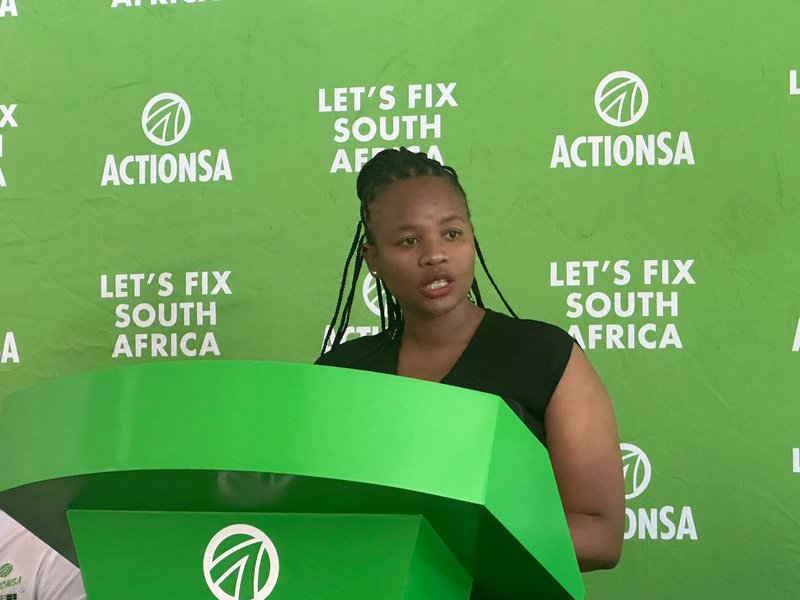
City of Tshwane mayor Nasiphi Moya says the city is not facing a water crisis but rather battling losses caused by ageing infrastructure, leaks, and inefficiencies, as she also pointed to signs of financial recovery and improved stability.
Delivering her State of the Capital Address (SOCA) on Thursday, Moya said Tshwane supplies between 800 and 900 million litres of water daily through a mix of bulk procurement and internal production.
ALSO READ: ANC holds Sakhisizwe Ward 9 in emphatic by-election win
“Bulk procurement accounts for 72% of supply, mainly sourced from Rand Water, which provides over 600 million litres per day,” she said.
Moya said non-technical losses stood at 39% when the administration took office, driven by theft, unbilled consumption and ageing infrastructure—some of it more than 50 years old.
She said the city has since introduced a Water Stabilisation Plan aimed at improving reservoirs and pump stations, managing pressure, fixing leaks, reducing illegal connections and strengthening monitoring and metering.
“This restores system control while improving long-term performance,” she said.
While Hammanskraal and Bronkhorstspruit remain pressure points, Moya said progress is being made. She cited areas such as Ikageng and Mahube Valley Extension 3 in Mamelodi, where reliable water supply has been restored after more than six years.
She added that reservoir and storage infrastructure is performing strongly, with ongoing projects expected to improve capacity and reliability. The city is also working to stabilise supply in Hammanskraal before commissioning additional modules.
“Water losses are being reduced through control, repairs and monitoring. The goal remains unchanged: to build a water-secure city,” she said.
Turning to the city’s finances, Moya said the administration inherited an institution under severe strain, with debt exceeding R13 billion, unfunded budgets and weak financial controls.
ALSO READ: Malema sentenced to five years for East London firearm discharge
“This was not a city on stable ground. It was an institution under pressure, constrained in its ability to meet service delivery demands and exposed to growing risks that threatened its sustainability,” she said.
Moya said the city has since focused on restoring financial discipline, rebuilding credible budgets and strengthening internal controls. Tshwane has now delivered a fully funded budget for the 2025/26 financial year—the first since 2021/22—validated by National Treasury of South Africa.
Revenue collection has been strengthened through the Tshwane Ya Tima campaign, alongside improvements in billing accuracy and efforts to rebuild public trust.
Cash-backed reserves have increased from R835 million to over R1.9 billion and are projected to reach R2.86 billion by the end of 2025/26. The city’s current ratio has also improved and is expected to reach 0.86.
Moya said total debt, including Eskom-related obligations, has been reduced from R6.66 billion in October 2024 to about R4.73 billion at the end of March 2026.
“We are honouring our commitments, paying service providers more efficiently, and restoring confidence in the city’s financial credibility,” she said.
She added that the draft 2026/27 budget and Integrated Development Plan aim to maintain a fully funded, cash-backed position while increasing capital investment from R2.8 billion to R3.5 billion.
Cost-cutting measures include reducing reliance on outsourced services, with water tanker services down 79%, security services down 17% and overall contracted services reduced by 4.4%.
“These savings are being redirected into infrastructure, maintenance and building a capable state,” Moya said.
She said the improvements have strengthened investor confidence, improved access to funding and lowered borrowing costs, signalling a gradual recovery for the capital city.