
By Akani Nkuna
Deputy President Paul Mashatile has raised concerns about the sources of water supplied by private tankers as the Bronkhorstspruit Water Treatment Works (BWTW) remains closed for cleaning and decontamination.
“We are quite concerned about private suppliers of water with water tankers, because we do not know where they get that water from. So, there will be an intervention to check those. But the city is supplying water in the meantime whilst this plant is attended to,” said Mashatile, who chairs the Water and Sanitation Inter-Ministerial Committee (IMC).
ALSO READ: Johannesburg Water maintains Bez Valley water warning despite safe test results
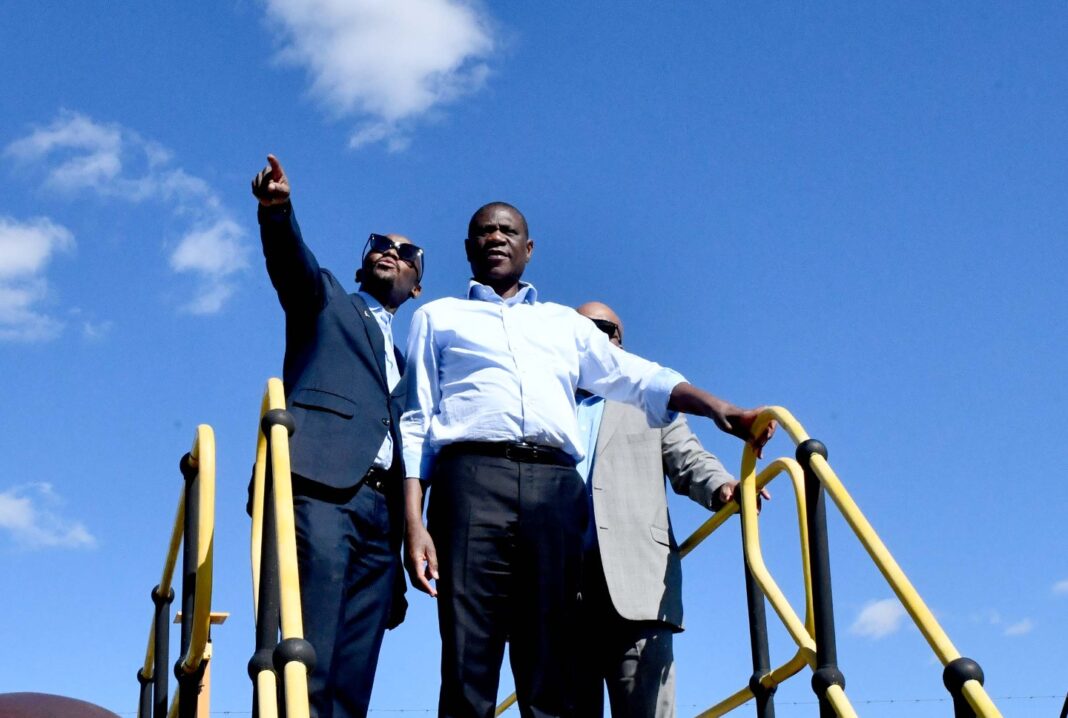
He was speaking to the media in Bronkhorstspruit on Monday following an oversight visit to the BWTW after more than 400 cases of gastrointestinal illness linked to the plant were reported in Tshwane in October.
A week earlier, the Department of Water and Sanitation (DWS), the City of Tshwane and the Gauteng provincial government held a joint media briefing at which it was revealed that water from the BWTW had not been chlorinated between 24 September and 14 October, leaving residents exposed to unsafe drinking water.
The incident sparked political backlash against Tshwane Executive Mayor Nasiphi Moya, with the EFF, one of the city’s coalition partners, calling for her resignation.
The Public Protector and the South African Human Rights Commission (SAHRC) are conducting separate investigations into the city’s failure to procure chlorine, alert residents to the contamination, and maintain the plant.
The investigations follow a complaint lodged by the EFF last week.
Mashatile said the IMC was examining the incident to identify long-term preventive measures that could be implemented nationally to prevent similar failures.
He also attributed water supply challenges in several parts of the country to ageing infrastructure.
“What is important for us is that this should not recur. The minister of DWS, Pemmy Majodina, is looking at the whole country. We have heard that there are challenges in Gauteng, the minister is going to look at it as we leave here,” said Mashatile.
ALSO READ: Ramaphosa: Healthier public finances must translate into a better life
At the same briefing, Moya reiterated that the city’s internal investigation would continue and that action would be taken against officials found responsible for the chlorine shortage and the failure to shut down the plant when the water became unsafe.
Asked whether the crisis had damaged her prospects of returning as mayor after the 2026 local government elections, Moya said she was not focused on her political future.
She said her administration’s work over the past two years, including efforts to improve municipal infrastructure, would speak for itself when voters went to the polls.
“The work that we have done in CoT, was to turn around the institution and part of it was the issue of investing in our infrastructure… at this stage it is less about me and the campaign but implementing the short-term intervention [to] reduce number of infections and finish the work at the plant,” Moya said.