spot_img

Ramaphosa extends Presidential eThekwini Working Group, shifts focus to economic reform

-Advertisement-spot_img

Must read

By Thapelo Molefe

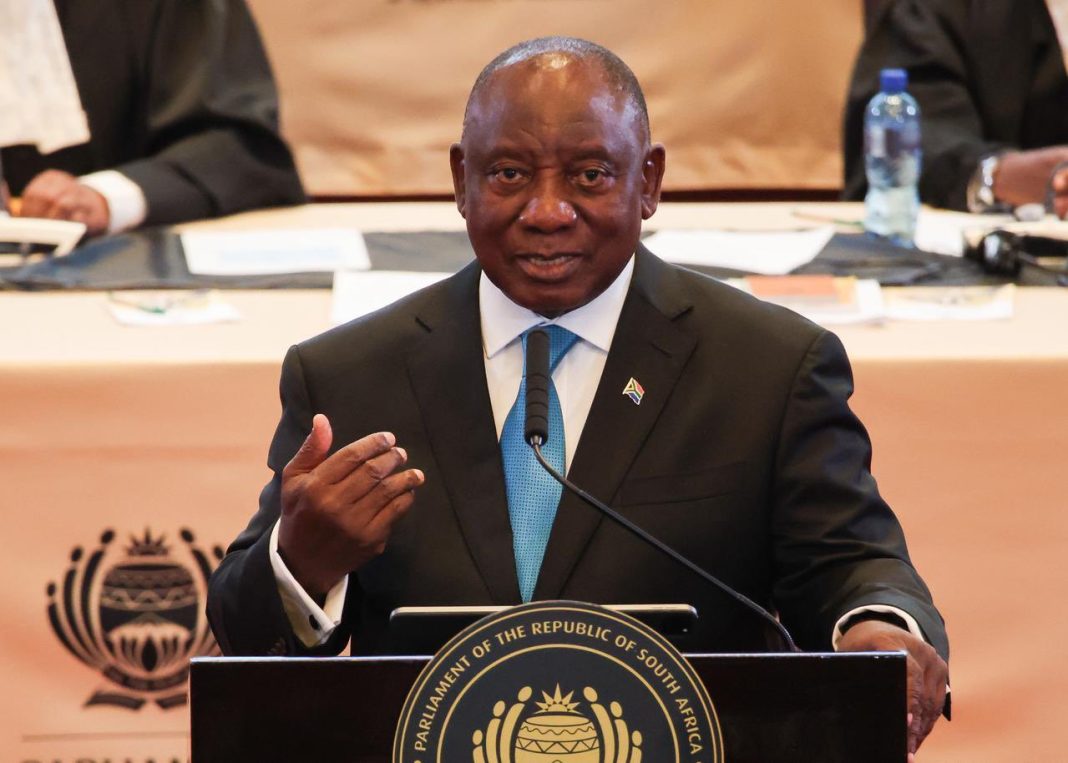
President Cyril Ramaphosa has extended the Presidential eThekwini Working Group beyond its initial 24-month term, confirming a second phase of the intervention that will shift from stabilisation to structural economic reform and large scale investment in the metro.

The working group, established in 2024 after engagements between the Presidency, the Durban Chamber of Commerce and Industry, and other stakeholders, was initially designed as a time-bound intervention to stabilise governance, restore service delivery, and rebuild investor confidence in eThekwini. Its original mandate was set to expire at the end of March.

ALSO READ: Basic Education DG continues to monitor SAFE projects in the Eastern Cape

“The extension of the Presidential eThekwini Working Group, as requested by the social partners, is both a vote of confidence and a recognition that the journey is not yet complete,” he told stakeholders at the Inkosi Albert Luthuli International Convention Centre on Tuesday.

When the intervention began, eThekwini was grappling with water and electricity interruptions, poorly maintained infrastructure worsened by the 2022 floods, crime, port efficiency concerns and a worrying decline in tourism numbers.

“When we first met in early 2024, we were navigating uncertainty. Confidence was fragile. Service delivery challenges were acute. The future of eThekwini required urgent, coordinated action,” Ramaphosa said.

The working group brought together national, provincial and municipal government, organised labour, business and civil society under eight priority areas, including governance and financial sustainability, water and sanitation, safety and security, tourism revitalisation, roads and transport, human settlements, disaster response and stakeholder management. It reported progress to the President and ministers every three weeks.

ALSO READ: Diesel, petrol prices to increase on Wednesday

Two years later, Ramaphosa said there are signs that conditions have stabilised.

“After two years of the Presidential eThekwini Working Group, there are tangible signs that the decline has been arrested, that stability has taken root and that recovery is underway,” he said.

The Durban Business Confidence Index has reached its highest level since its inception. Tourism numbers during the recent festive season climbed to nearly 1.2 million visitors, occupancy rates reached 77 percent and tourism spend totalled R2.7 billion.

“Durban is once again a destination of choice,” he said.

In manufacturing, confidence rose by nearly 16% quarter on quarter, a significant development for a metro whose economy is closely linked to the Port of Durban and the country’s second largest manufacturing sector.

Ramaphosa also cited improved revenue collection, enhanced coordination during high risk periods, expanded CCTV coverage and the completion of repairs to the Umlazi Canal to protect industrial infrastructure in the South Durban Basin. The Southern Aqueduct Upgrade, aimed at securing water supply to the industrial corridor, is currently under construction, while bulk dam levels remain stable.

The municipality’s council approval of a Partnerships Framework in September 2025 was described by the president as a critical step in establishing “a transparent, legally compliant system for public private collaboration on infrastructure and catalytic projects”.

However, he cautioned that early gains should not be mistaken for lasting transformation.

ALSO READ: Bishops Diocesan College defend KES Water Polo tournament crown with win over St David’s

“While we applaud this progress, stabilisation is not the same as transformation,” he said.

He noted that two thirds of surveyed business leaders still believe service delivery complaints are not resolved within a reasonable timeframe, while non-revenue water remains at 55%, well above acceptable benchmarks.

Environmental management, roads and derelict buildings in the city centre continue to undermine investor confidence and tourism.

The President said the second phase of the working group will prioritise economic development and structural reform.

He added that through the partnerships framework, government and business “must unlock infrastructure investment at scale” and reduce delays in development approvals.

“If eThekwini is to compete with other metros, we must reduce friction in development planning, accelerate approvals and reform cost structures that deter investment. A reform agenda in this area will form a central part of our efforts in the second phase,” Ramaphosa said.

He also announced that the National Business Initiative will support the establishment of an Independent Public Private Partnership Office within the City Manager’s office to strengthen technical capacity, while the working group’s approach will be embedded within the District Development Model to ensure sustainability beyond direct presidential oversight.

“Together, we can move eThekwini from stabilisation to catalytic growth,” he said.

INSIDE METROS

-Advertisement-spot_img

More articles

LEAVE A REPLY

Please enter your comment!
Please enter your name here

QCTO

spot_img

AVBOB STEP 12

spot_img

Inside Metros G20 COJ Edition

spot_img

JOZI MY JOZI

spot_img

Inside Education Quarterly Print Edition

spot_img

Latest article