
By Johnathan Paoli
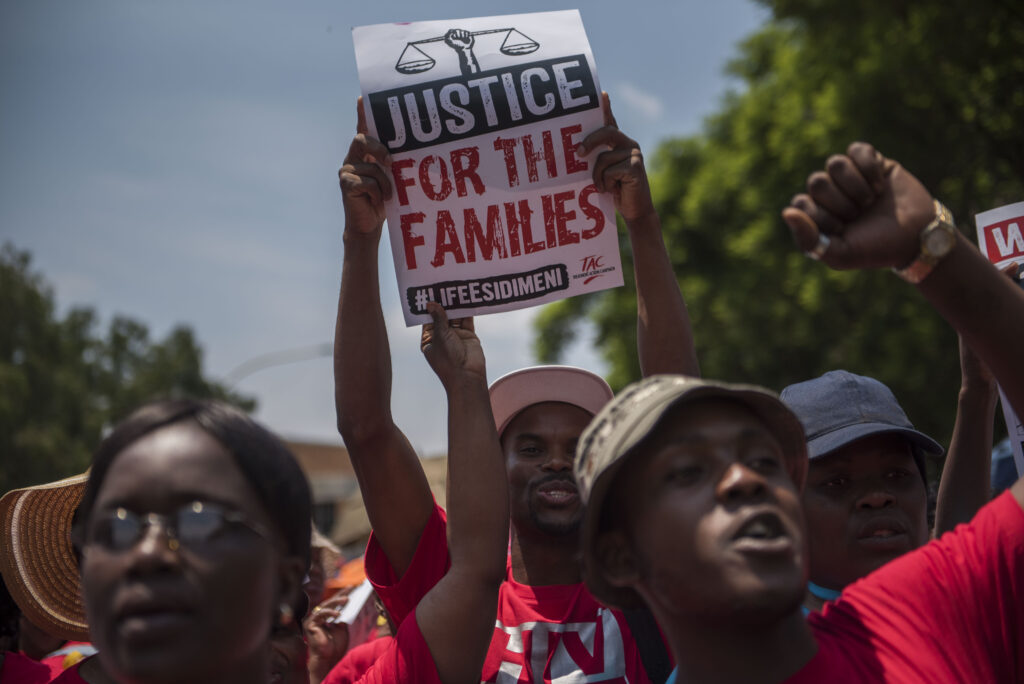
The National Prosecuting Authority (NPA) has confirmed that, after nearly a decade, it has decided to prosecute individuals implicated in the Life Esidimeni tragedy.
NPA Gauteng spokesperson Lumka Mahanjana said on Monday that the decision marked a critical step toward accountability for the victims and their families.
ALSO READ: United no more: UFC founders to contest local elections separately
“After careful consideration of the inquest findings, supporting evidence, and applicable legal standards, the NPA has resolved that there is sufficient basis to institute criminal prosecutions,” Mahanjana said.
She said the delays were due to the complexity of the case, the scale of the evidence and the need to ensure a thorough and legally sound process.
Mahanjana said a further delay was caused by the fact that newly appointed National Director of Public Prosecutions Advocate Andy Mothibi had to be briefed on, and sign off on, the decision.
“The NPA acknowledges the pain and frustration experiences by affected families during this period,” he said.
Mahanjana said the charges are expected to include culpable homicide, among others, against the individuals deemed responsible.
ALSO READ: Ntuli says R1.685bn in Ithala depositor payments processed
The tragedy arose after the Gauteng Health Department terminated its long-standing contract with Life Esidimeni, a private care provider that had, since 1970, provided 2,260 beds across five facilities for chronic mental health care users.
The termination, driven by cost-cutting pressures and a policy shift linked to the National Mental Health Policy Framework’s push to deinstitutionalise patients, led to the transfer of mental healthcare users to NGOs, hospitals and family care between 2015 and 2016.
Despite an initial phased reduction plan, the process was rapidly accelerated into what became known as the Marathon Project, with patients moved into facilities that were often unlicensed, unprepared and severely under-resourced.
Key decision-makers included then Health MEC Qedani Mahlangu, former head of department Dr Barney Selebano, and former mental health director Dr Makgabo Manamela, who proceeded with the transfers despite warnings from mental health experts and civil society organisations, including the South African Depression and Anxiety Group, the South African Society of Psychiatrists and the South African Federation for Mental Health.
NGOs tasked with receiving patients were not properly assessed, trained or funded, with some lacking even basic infrastructure.
Many mental healthcare users were inappropriately placed, sometimes mixed across gender lines or sent to facilities intended for children, while others were discharged to families unable to care for them.
Patients were reportedly abused, neglected and, in some cases, deprived of food, water, shelter and adequate sanitation at the NGOs.
As a result, 141 patients died between the end of April 2016 and January 2017, many from neglect and inadequate care.
The whereabouts of some mental healthcare users transferred from Life Esidimeni also remained unknown long after the transfers.
The deaths prompted an investigation by Health Ombud Professor Malegapuru Makgoba, whose findings led to a landmark arbitration chaired by former Deputy Chief Justice Dikgang Moseneke, where the state conceded liability and compensation was awarded to victims’ families.
ALSO READ: Marius van der Merwe murder accused gets earlier bail date
Although the case dockets were later referred to the NPA, prosecutions were initially declined, leading to calls for a formal inquest.
In July 2024, Judge Mmonoa Teffo delivered the inquest judgment in the Gauteng High Court in Pretoria.
The inquest sought to determine the causes of death and whether any criminal conduct contributed to them.
Teffo found that Mahlangu and Manamela negligently caused the deaths of at least nine patients.
The NPA said further details regarding court dates, as well as the specific charges, would be communicated in due course.