By Johnathan Paoli
Deputy President Paul Mashatile has maintained that access to clean water cannot be a privilege “enjoyed by some”, welcoming the launch of the national water acceleration programme as a practical step towards restoring dignity to disadvantaged and underserved communities across South Africa.
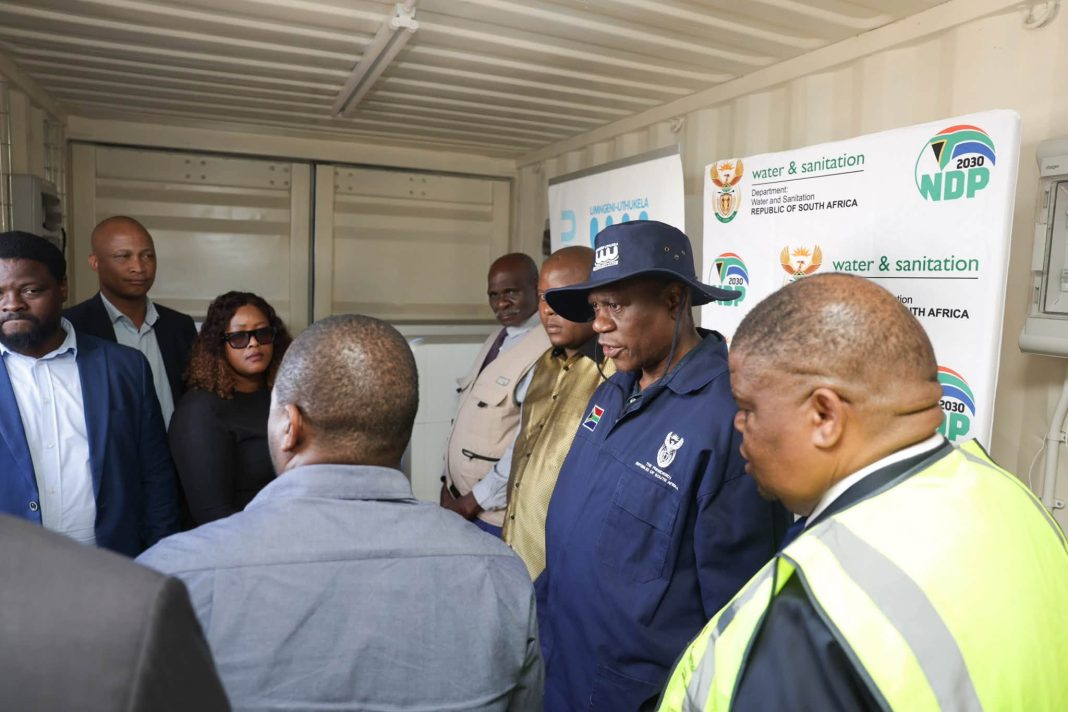
Speaking at the launch of the Babanango Water Supply Scheme at the Nhlengile Spring Water Treatment Plant in the Zululand District Municipality on Saturday, Mashatile said the programme honoured Nelson Mandela’s legacy by ensuring vulnerable communities received one of the country’s most basic constitutional rights.
ALSO READ: Ramaphosa, Netumbo Nandi-Ndaitwah remarks at the South Africa-Namibia Business Forum
“The world remains beset by so much suffering, poverty, and deprivation. It is in your hands to make our world a better one for all, especially the poor, vulnerable, and marginalised. Today, as we commemorate Mandela Day, we respond to that call through practical action that uplifts communities,” Mashatile said.
“As we launch the Mandela Day Water Services Project and Acceleration Programme for Unserved Communities, we recommit to ensuring that all South Africans have access to basic services essential for human dignity and health, especially clean and reliable water, honouring Madiba’s legacy through our actions,” he added.

Mashatile stressed that access to safe drinking water remained a constitutional imperative.
“Water is a fundamental human right enshrined in our Constitution. When a community has no access to clean and reliable water, it is denied more than a basic service; it is denied dignity, opportunity and the full enjoyment of its constitutional rights,” he said.
He said that the hardships faced by rural communities, particularly women, children and the elderly who often travelled long distances to collect water, could no longer be tolerated.
“We are saying that no community is too remote, too small or too poor to be affected by development. We bring hope where there has been doubt, dignity where there has been struggle, and opportunity where there have been obstacles,” he said.

The completed scheme combines protected spring water sources, borehole backup systems, a treatment plant, reservoirs and distribution infrastructure capable of supplying up to 500,000 litres of treated drinking water daily to surrounding communities.
Mashatile acknowledged that residents had waited years for reliable water services but said the project represented a significant milestone in the government’s efforts to improve rural livelihoods.
ALSO READ: Springboks out to maintain winning momentum against Wales in Durban
He highlighted the broader programme, saying the government was expanding access through boreholes, protected springs, rainwater harvesting, and the rehabilitation of existing schemes.
As part of the Mandela Day programme, Mashatile officially handed over 27 decentralised water supply interventions across KwaZulu-Natal.
The provincial launch formed part of the national handover of 67 projects across KwaZulu-Natal, Gauteng, and the Eastern Cape aimed at accelerating water access in underserved communities.
The Gauteng leg of the programme was attended by President Cyril Ramaphosa in Hamanskraal, outside Pretoria.
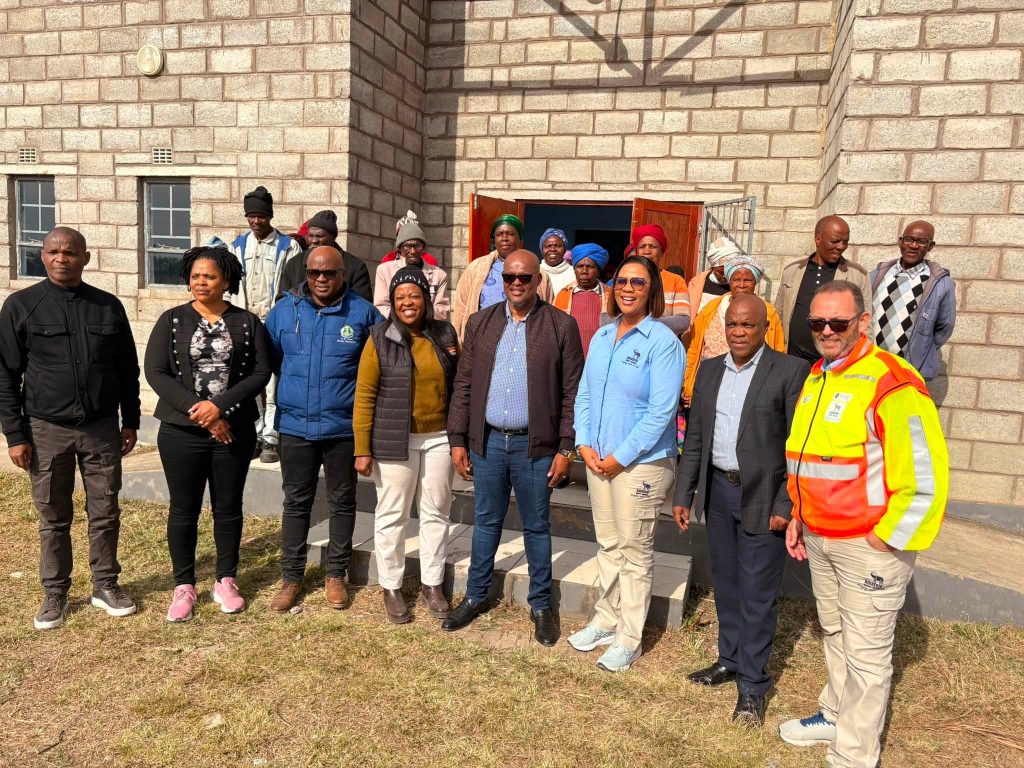
Meanwhile, the Eastern Cape hosted its own launch under Minister in the Presidency for Planning, Monitoring and Evaluation, Maropene Ramokgopa, who visited the newly completed Mncwasa Water Supply Reticulation Project in Mqanduli.

The project, completed earlier this month at a cost of more than R4.4 million, will provide reliable water to 95 households and create 20 employment opportunities during construction.
It forms part of 13 decentralised water supply schemes launched across the province under the National Water Access Acceleration Programme.
Ramokgopa said the national government had made a significant financial commitment to improving water infrastructure in the province.
“It’s about R130 million, plus or minus around there, that we have invested as the National Department, of course, for this particular province. And it will be servicing thousands and thousands of people. We’ve got about 13 more projects that we’ve invested in the entire province, and it will be making sure that almost 40,000 people who did not have access to water will now have access to water,” the minister said
Ramokgopa said long-term sustainability would be central to the programme.
“The reason we are here, most especially as the Department of Planning, Monitoring and Evaluation, is precisely because of that longevity and sustainability. We talk about sustainable development, so development must always be sustainable,” she said.
Ramokgopa said officials would continue monitoring completed infrastructure and report regularly to the cabinet to ensure proper maintenance and long-term functionality.
INSIDE METROS