
By Thapelo Molefe
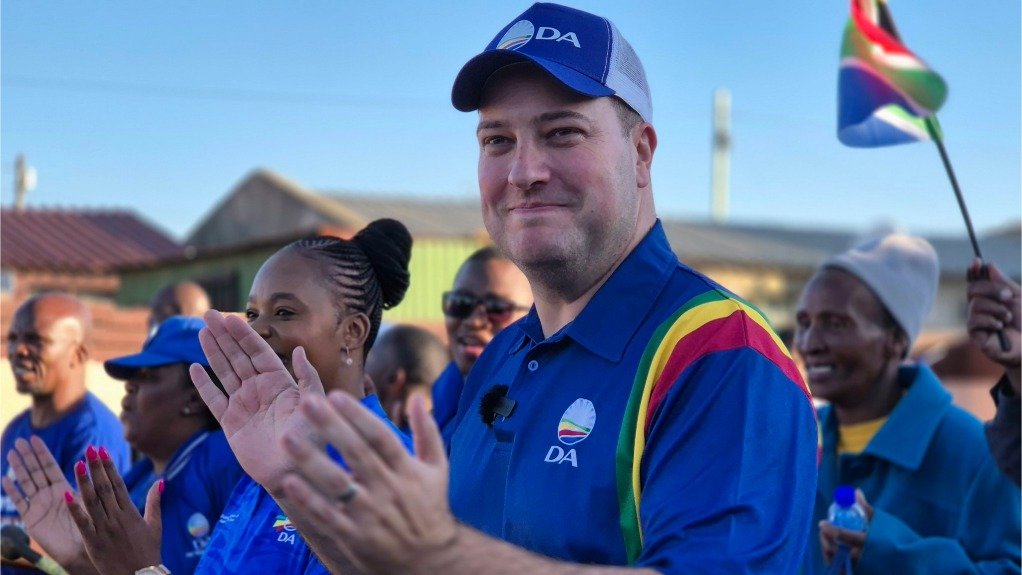
The Democratic Alliance (DA) says it has delivered clean water supply to the Water Wax community in Johannesburg after the city abandoned a borehole project that had been budgeted at almost R37 million.
DA Johannesburg mayoral candidate Helen Zille said the party completed the project for about 7% of what the City had budgeted for the standpipe component alone.
The water system, launched on Tuesday, includes a borehole, solar panels, an inverter, security infrastructure and a purification system to provide residents with safe drinking water.
ALSO READ: North West again mulls reviving Adopt-a-Cop after third school fire
The City of Johannesburg initially commenced drilling a borehole at the Waterworks informal settlement in October 2025 as part of a pilot project with Wits University, but the initiative stalled when municipal funds were depleted.
“For years, this community has lived without a proper water supply,” Zille said.
“Almost exactly a year ago, the City of Johannesburg began drilling a borehole here. Then the work stopped. The City had run out of money. The project, like so many others, was abandoned.”
The cost of the project became a point of contention after DA councillor Maureen Mnisi asked the city about the budget for the standpipe component. According to Zille, the city disclosed that almost R37 million had been allocated.
“R37 million for standpipes for an abandoned, incomplete borehole,” she said.
“We knew we could deliver the entire project, including the borehole, for a fraction of that amount – so the DA raised the money and got the job done,” she said.
Johannesburg continues to grapple with water shortages and unreliable supply, particularly in informal settlements.
The 2025 borehole pilot was part of Johannesburg Water’s response to persistent water outages. The utility said nine informal settlements were expected to receive boreholes through the initiative.
At the time, Johannesburg Water managing director Ntshavheni Mukwevho said the utility was losing about 33% of the water supplied to informal settlements, largely because of illegal connections and leaks.
ALSO READ: Half of South Africans say women earning more than men can cause relationship problems
“The losses that happen, which is about 33% of the volume that we supply in informal settlements, the illegal connections contribute a lot,” Mukwevho said.
“The issue there that worries us is that when that theft happens, it disturbs the systems.”
Residents also raised concerns about the reliability of water tankers being used to supply communities while longer-term infrastructure was being developed.
Zille also criticised Johannesburg Water for allegedly attempting to prevent the DA from completing the project.
She said officials from Johannesburg Water arrived at the site with the ANC Ward 10 councillor and ordered the DA to stop work, threatening prosecution for alleged trespassing.
“We told them: Go ahead,” Zille said.
“We were prepared to defend in court our right to complete an abandoned water project so that this community could finally have clean water.”
According to Zille, Johannesburg Water eventually backed down.
The project later faced another obstacle when Transnet raised concerns that one of the manifolds had been installed within a rail reserve.
Zille said the DA had agreed that the manifold could be moved if there were concrete plans to rebuild the railway, but said that the community could not continue waiting for water.
“This is not a functioning railway line. It lies in ruins because Transnet failed to maintain it. What remains are a few concrete sleepers among weeds and a recycling site,” she said.
“We told Transnet that when there are concrete plans to rebuild the railway, we will happily move the manifold. But Water Wax needs water now.”
The project has been presented by the DA as an example of what it describes as broader failures in Johannesburg, particularly around basic service delivery and the management of public funds.
Zille said the contrast between the city’s budget and the cost of the DA’s intervention demonstrated the scale of the problem.
“The City budgeted almost R37 million and failed to finish the job. The DA delivered the project, and more, for 7% of that amount,” she said.
She also accused state institutions of putting political and bureaucratic obstacles in the way of a project intended to provide residents with access to water.
“And instead of helping us, organs of the ANC-led state tried to stop us,” Zille said.
The intervention comes ahead of the 4 November local government elections, in which the DA is campaigning to take control of Johannesburg.
Zille said the Water Wax project showed what the party could achieve if it controlled the city.
“If this is what the DA can achieve in opposition, imagine what we can do in government,” she said.
“On 4 November, Johannesburg has a choice: more excuses, waste and failure – or a government that gets things done.”