Staff Reporter
The City of Johannesburg has pledged stronger financial controls, improved revenue collection, and tougher consequence management after the Standing Committee on Public Accounts (Scopa) demanded answers over billions of rand in unlawful expenditure that the metro regularised or wrote off.
The city appeared before SCOPA and the Portfolio Committee on Cooperative Governance and Traditional Affairs on Tuesday to account for its 2024/25 audit outcomes, financial management, governance failures and service-delivery performance.
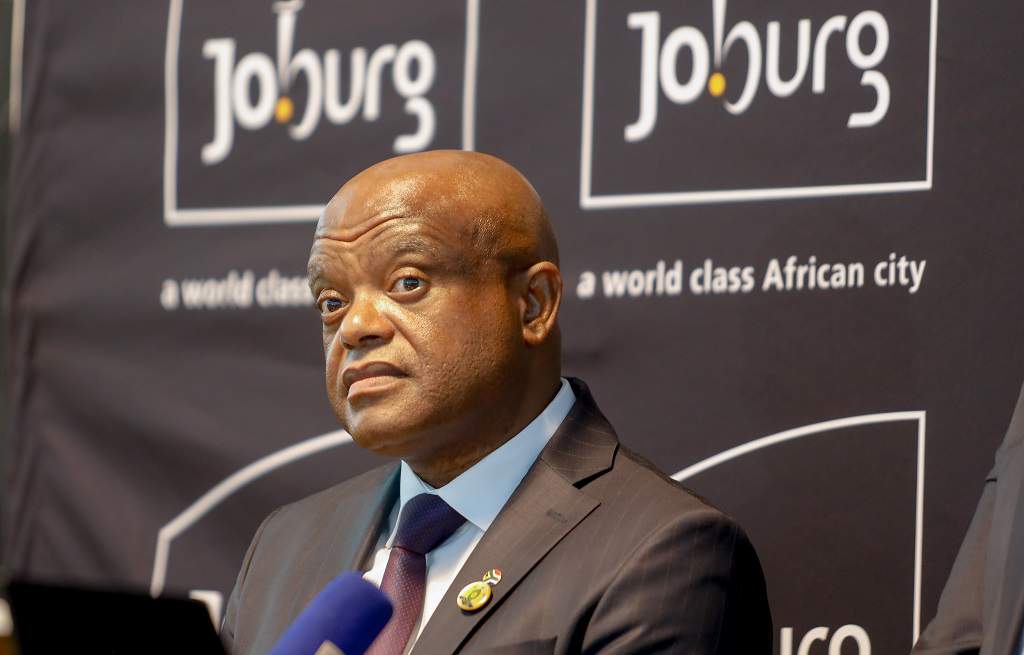
On Thursday, the office of Mayor Dada Morero said the city had accepted the Auditor-General’s findings and had shifted its focus from audit remediation to corrective action aimed at addressing the root causes of repeated failures.
ALSO READ: Where to watch the big match: Bafana Bafana vs Mexico
“The City values Parliament’s oversight role, recognising this engagement as a vital component of accountability,” the statement said.
The committees demanded a full account of investigations, recoveries, disciplinary action and criminal referrals linked to unauthorised, irregular, fruitless and wasteful expenditure that had been regularised or written off by the city.
The committees heard that Johannesburg’s accumulated UIFW expenditure balance had declined from R23.614 billion in 2023/24 to R13.278 billion in 2024/25, but warned that reducing the balance through regularisation or write-offs could not be presented on its own as evidence of improved governance.
They said regularisation did not make unlawful expenditure lawful and did not remove the obligation to act against those responsible.
MPs also questioned the city about amounts written off, 34 matters still under investigation and historical cases still before the disciplinary board.
They also asked for a breakdown of each contravention, whether the city suffered financial loss, whether value was received, what disciplinary action had been taken, whether money had been recovered and whether any criminal referrals had been made.
The city said it had presented a targeted turnaround programme focused on governance, financial sustainability and service delivery improvement.
The programme includes stronger audit readiness through improved reconciliations, debtor verification and stricter expenditure controls.
Also included, the city said, was better revenue collection through debtor recovery, billing corrections, metering improvements and stronger credit control; and reduced water and electricity losses through leak detection, smart metering, revenue assurance, infrastructure renewal and the removal of illegal connections.
“The City reaffirmed its commitment to consequence management, confirming that matters involving financial misconduct, procurement non-compliance, and control failures are being addressed through the appropriate governance and disciplinary structures,” it said.
Morero told the committees that Johannesburg Water was facing non-revenue water losses of 44.7%, amounting to about R3.8 billion. City Power’s total electricity losses stood at about 30%, with non-technical losses costing about R4 billion and technical losses accounting for R1.7 billion. The Johannesburg Social Housing Company was carrying a deficit of about R559 million.
The city’s chief financial officer, Tebogo Morake, told the committees that consumer debt had increased to R71 billion, placing further pressure on the city’s finances.
The Auditor-General’s office told SCOPA last week that Johannesburg was operating on “false assurances” about its entities, which had received unqualified audits with findings for several years, and that the city was not making decisions on credible information.
It also said the municipality had regressed in its audit outcome for 2024/25 and had failed to prevent unauthorised, irregular and wasteful expenditure.
MPs raised concern that some disciplinary matters may previously have been handled through ordinary labour-relations processes instead of the financial misconduct framework required by the Municipal Finance Management Act. The city told MPs that this had raised potential double-jeopardy questions in some cases, but the committees insisted on legal and factual explanations for each affected matter.
MPs also questioned whether Johannesburg’s complex structure, made up of a core municipal administration and 13 municipal entities, had weakened accountability.
The committees said it was often unclear whether responsibility rested with the city manager, a member of the mayoral committee, group governance, an entity board or an entity chief executive.